

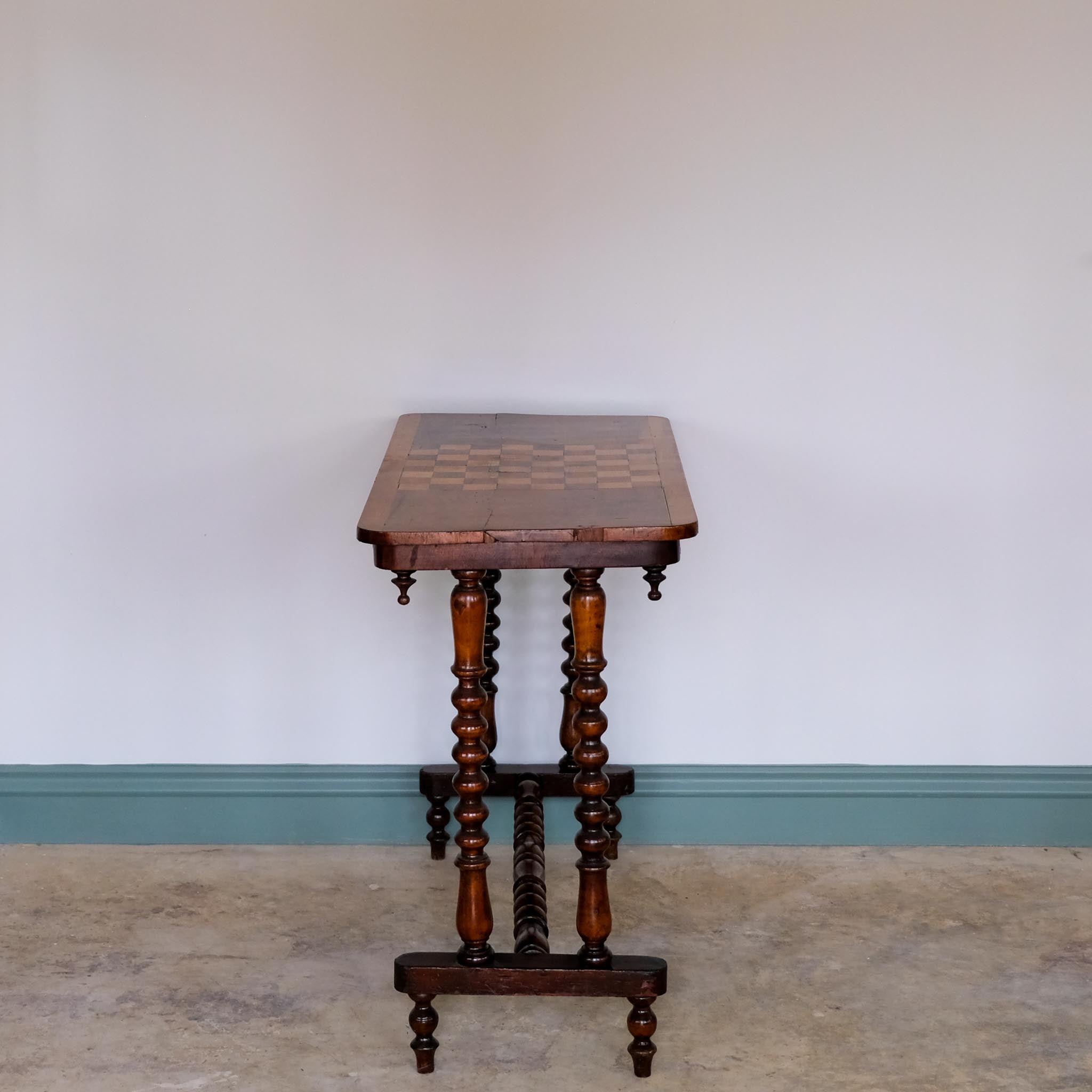
VICTORIAN WALNUT & SATINWOOD GAMES TABLE
£70
Characteristics
Victorian Walnut & Satinwood Games Table
England, Circa 1880
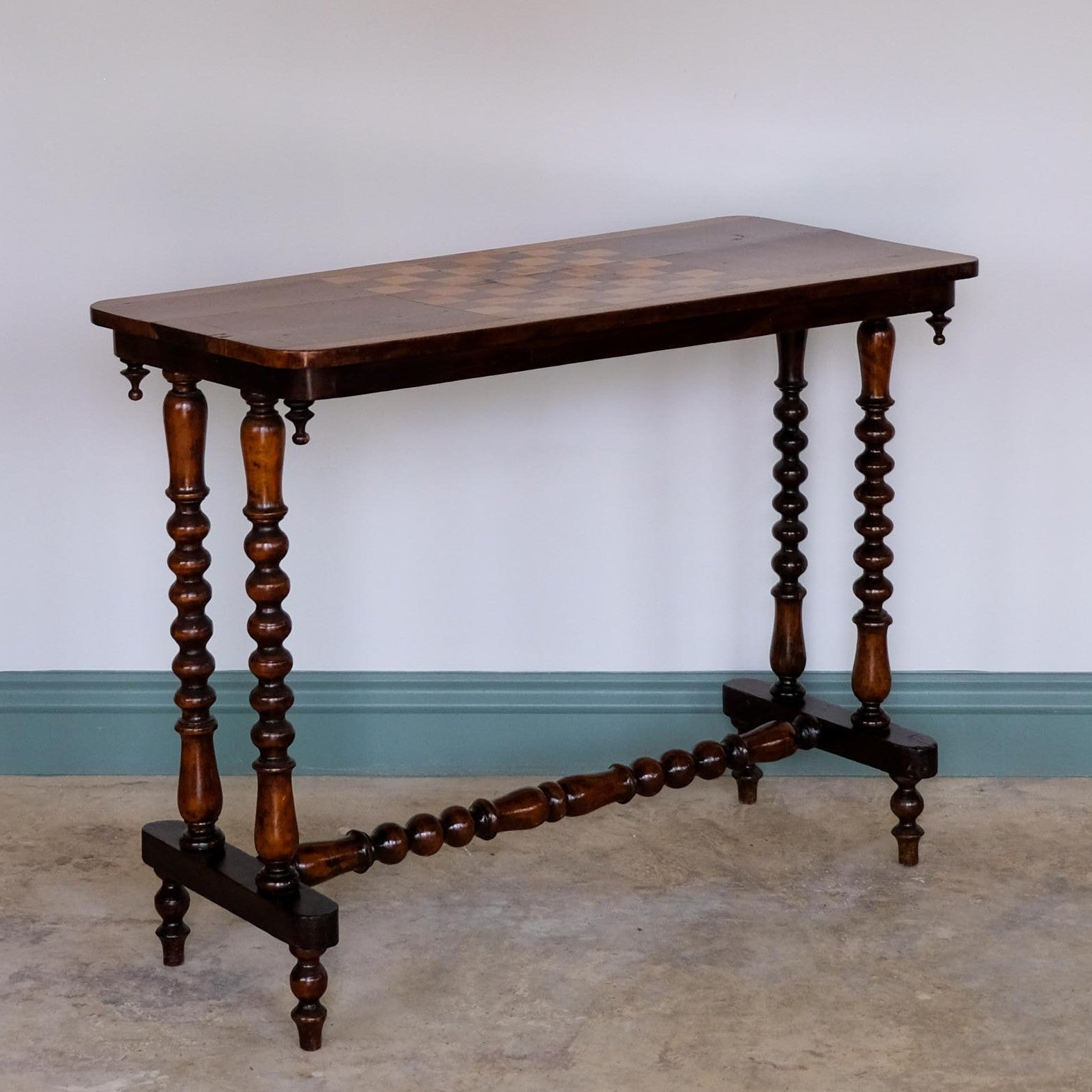
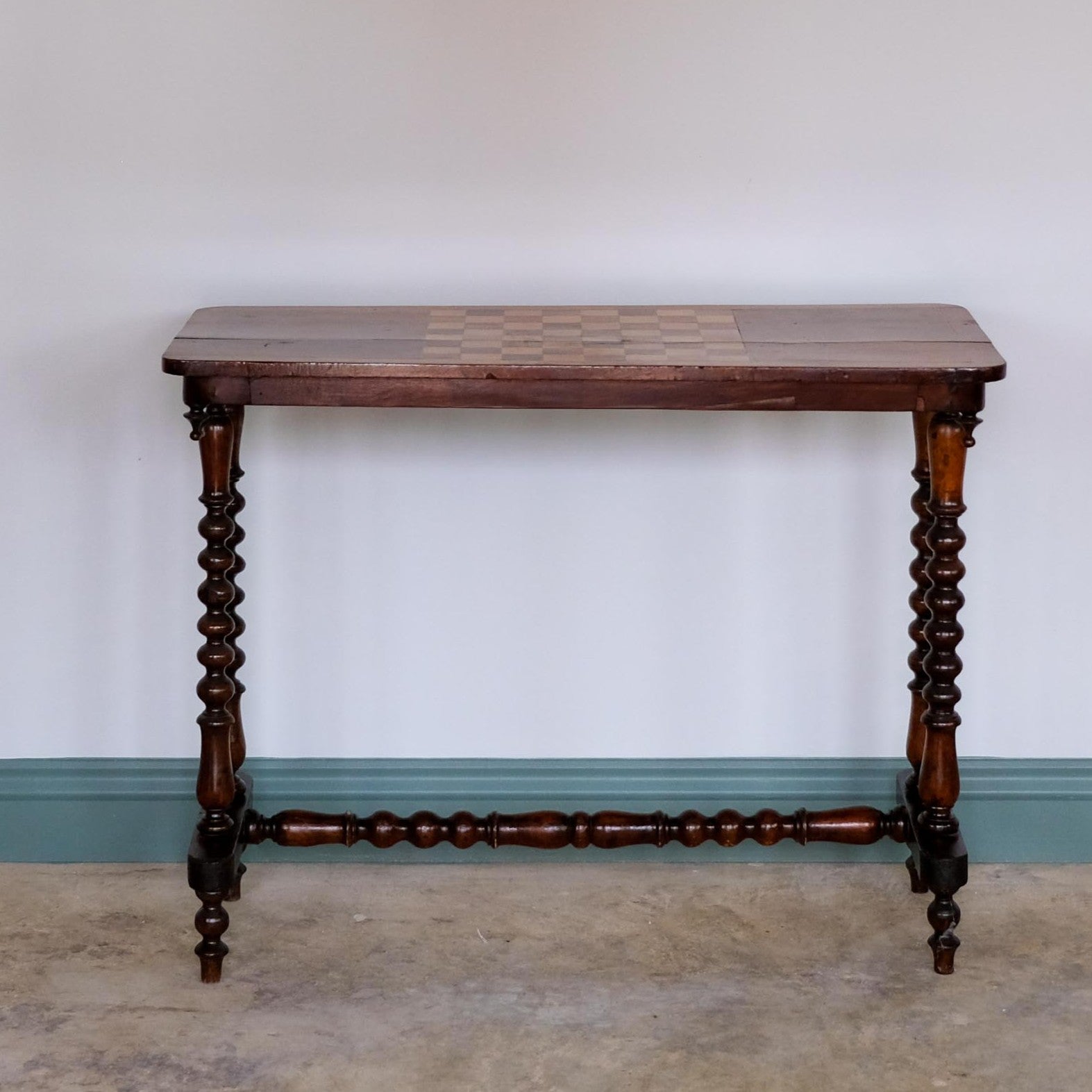
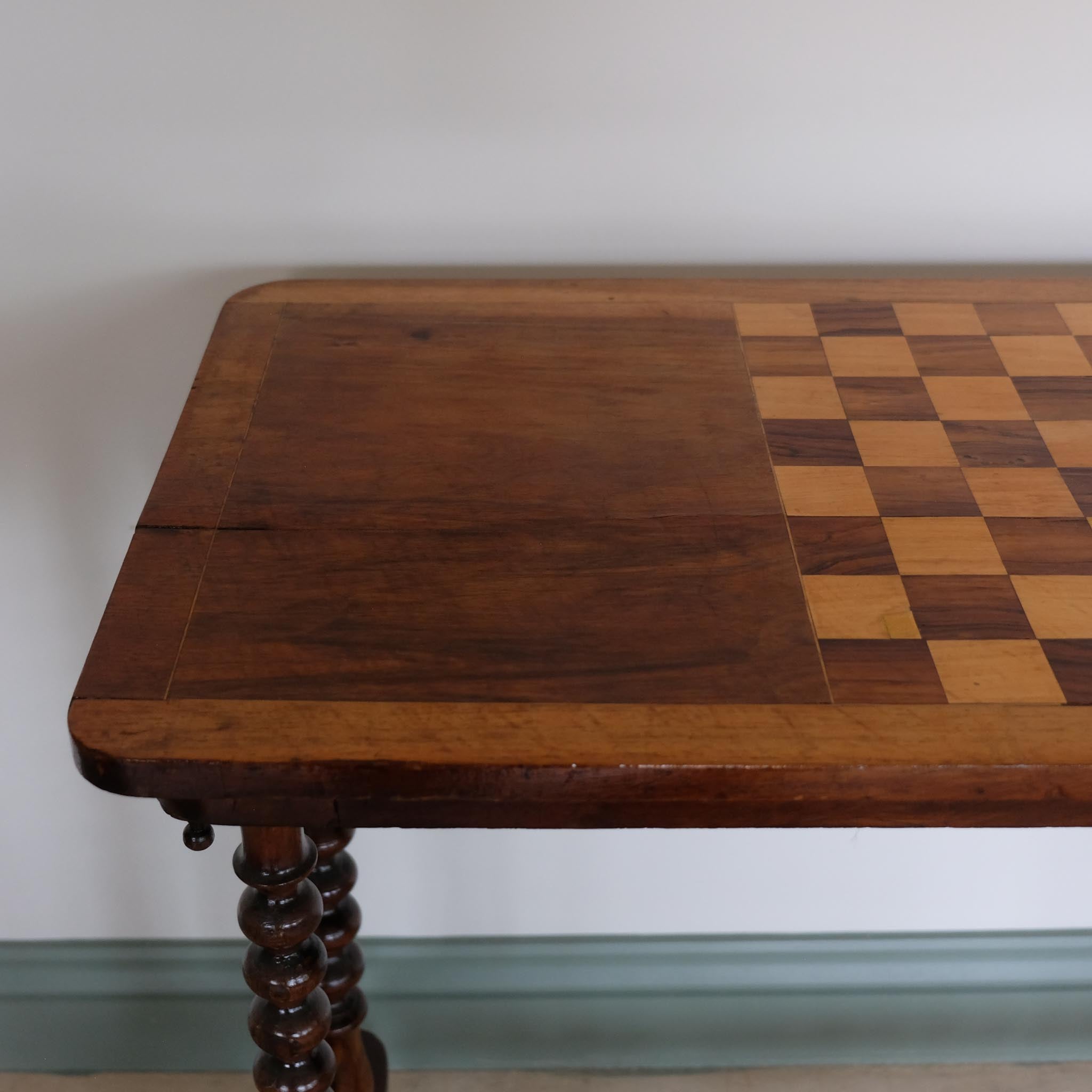
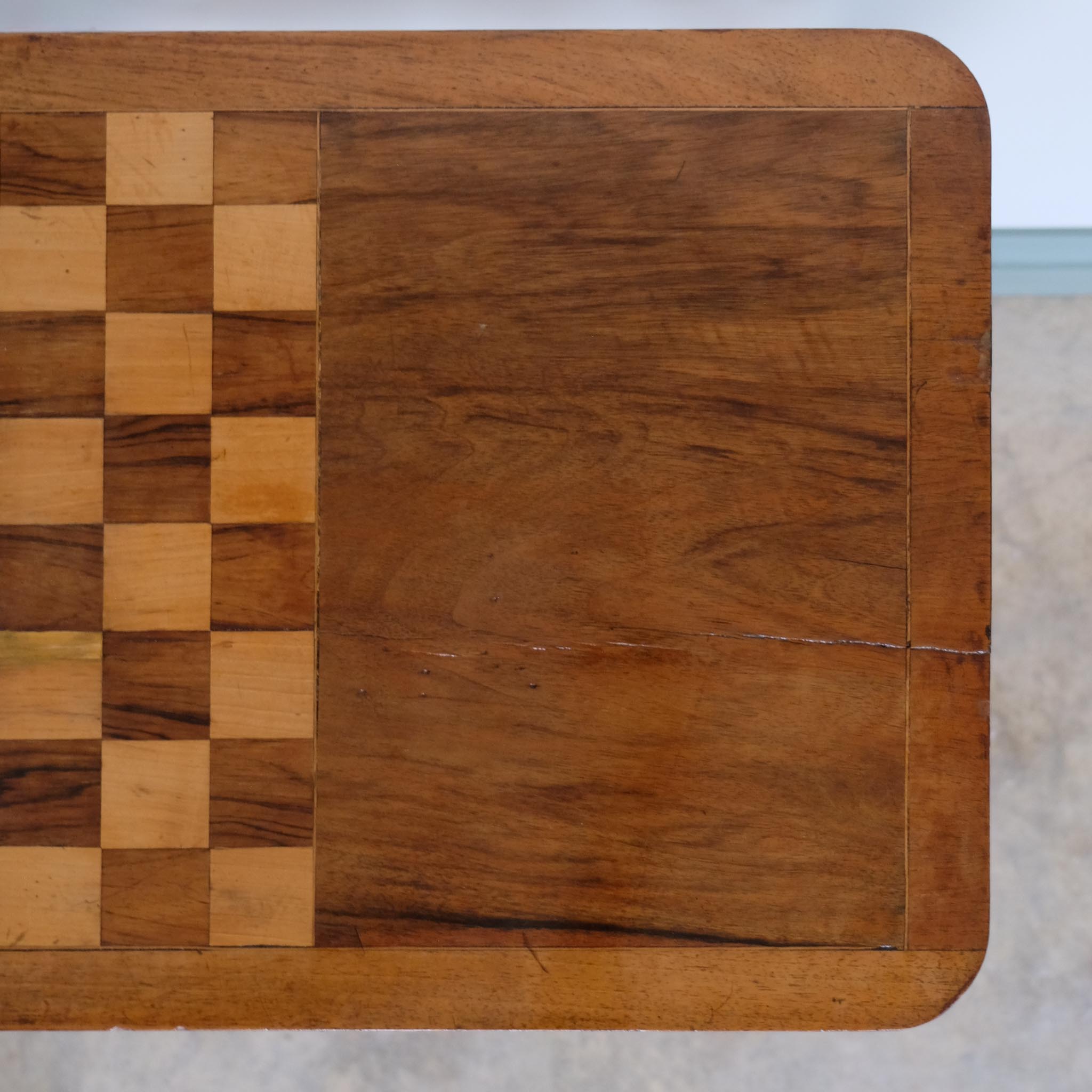
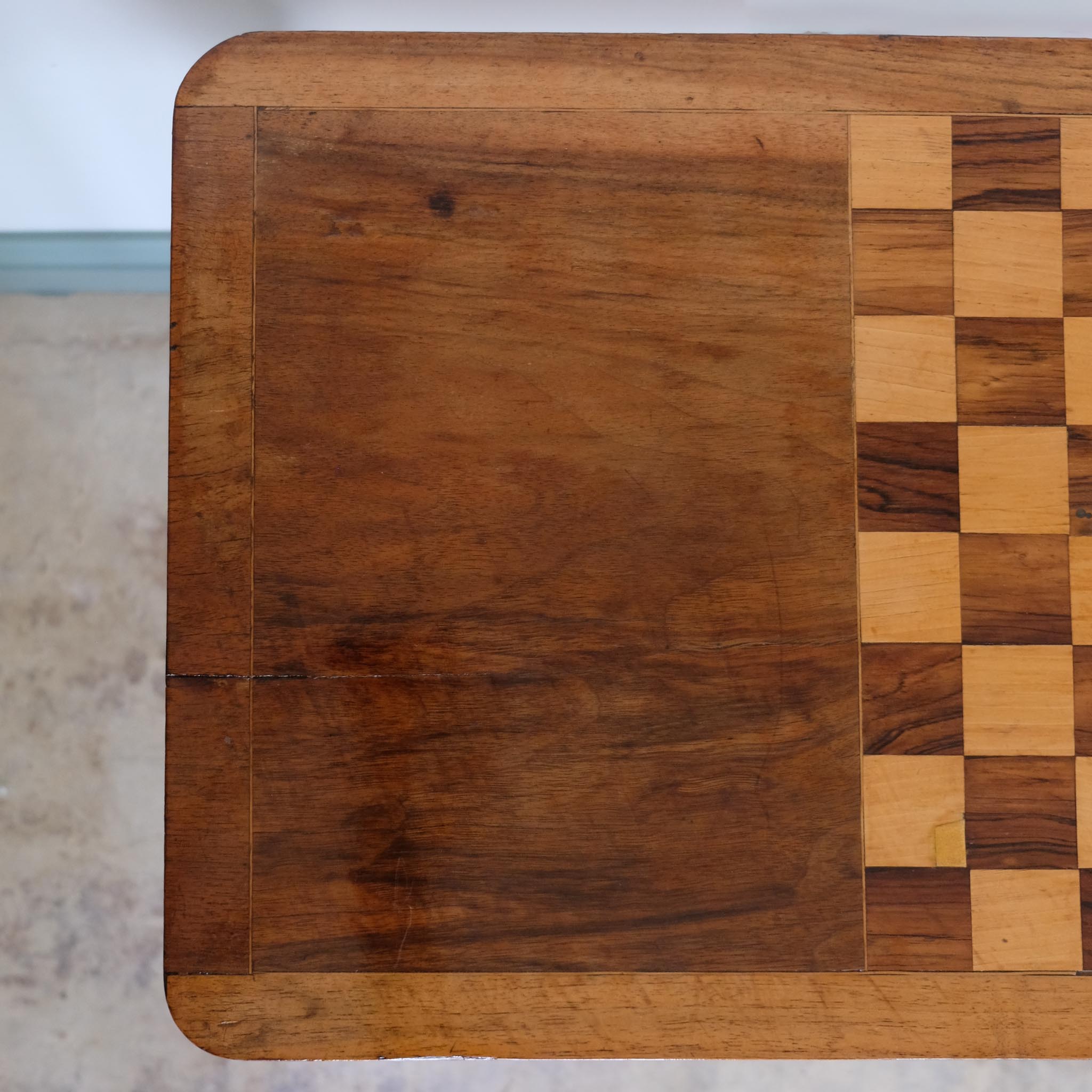
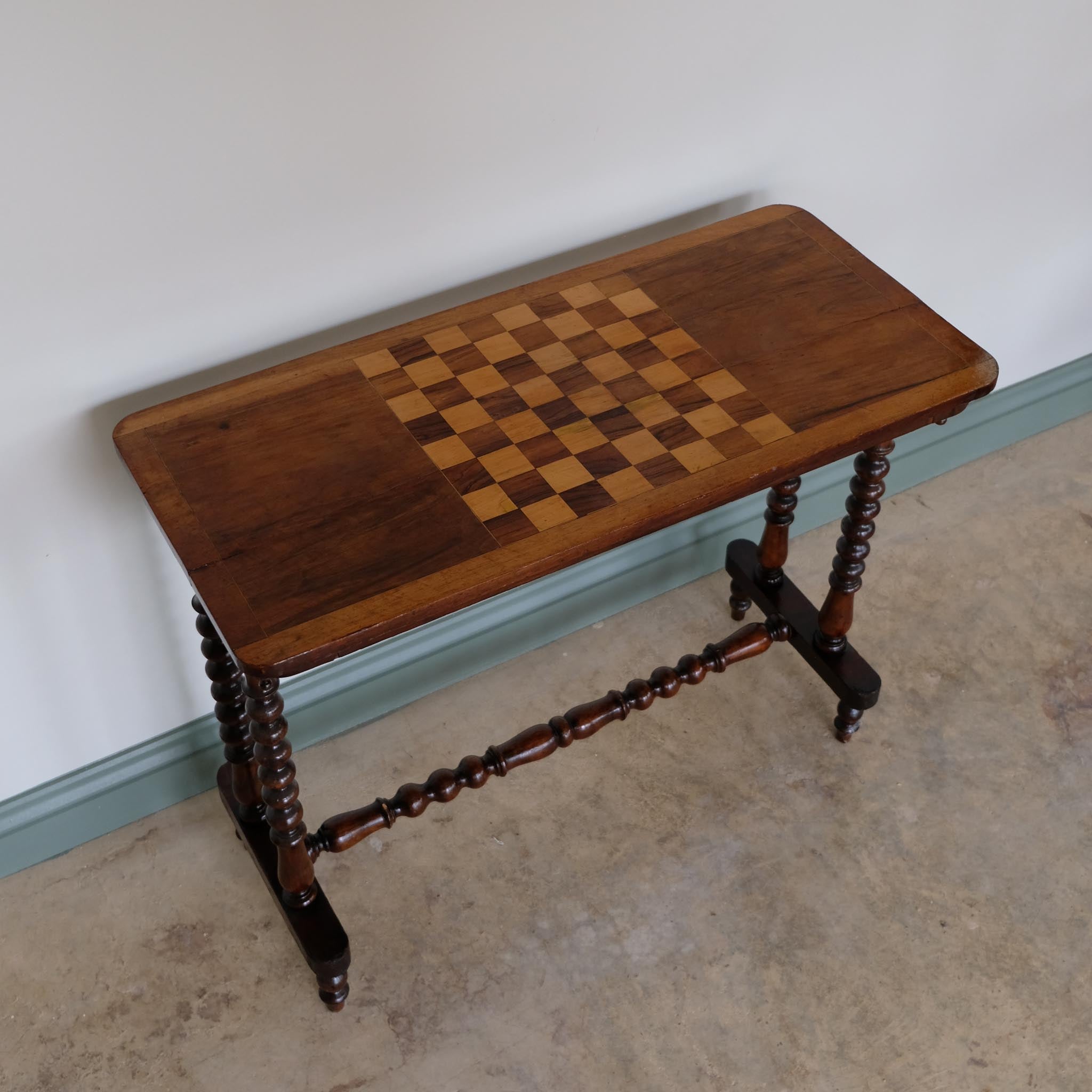
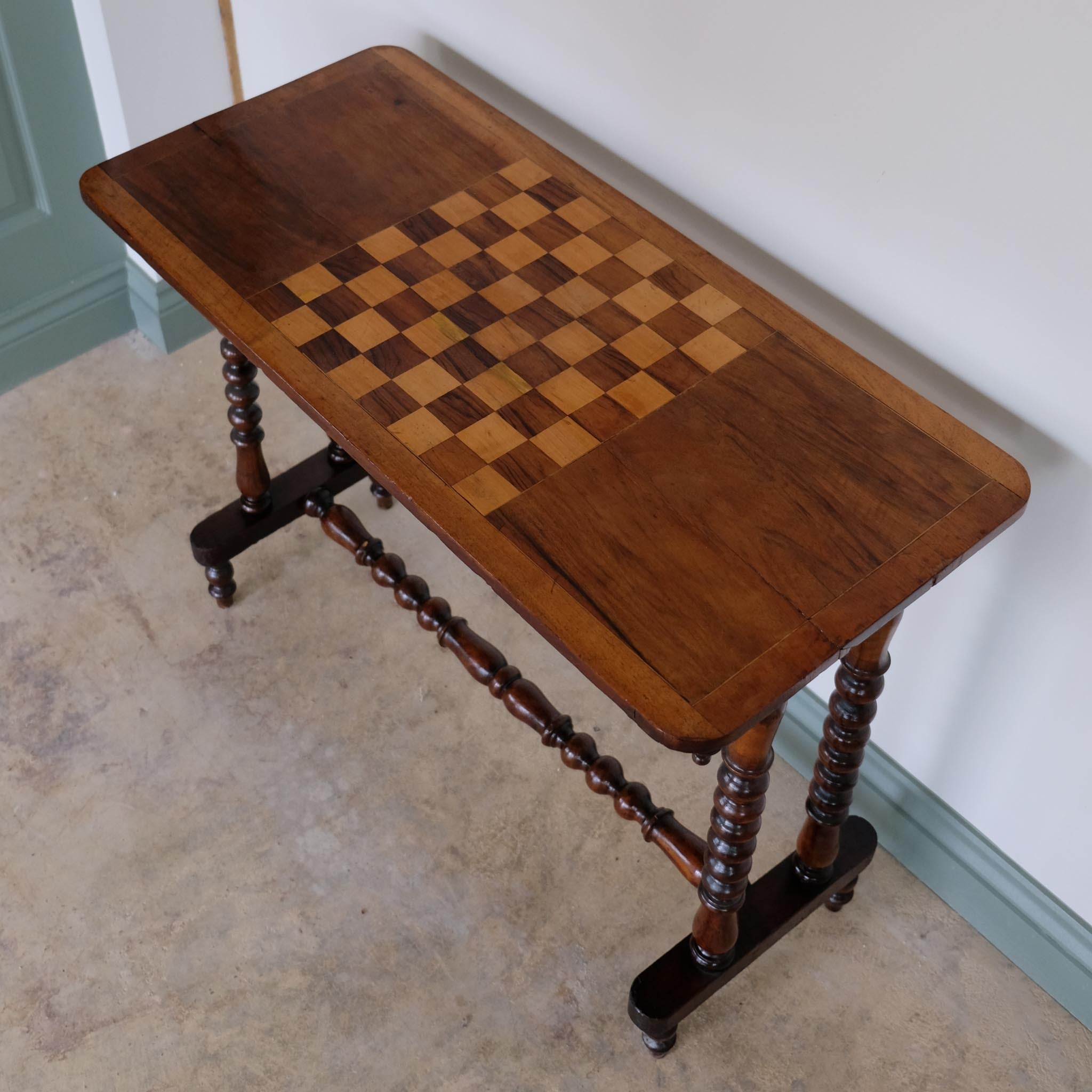
A fine and highly decorative Victorian walnut and satinwood games table, dating from around 1880, combining elegant proportions with practical versatility. Crafted from richly figured walnut and enhanced with contrasting satinwood inlay, this attractive piece was designed both as a functional occasional table and as an entertainment piece for the Victorian drawing room.
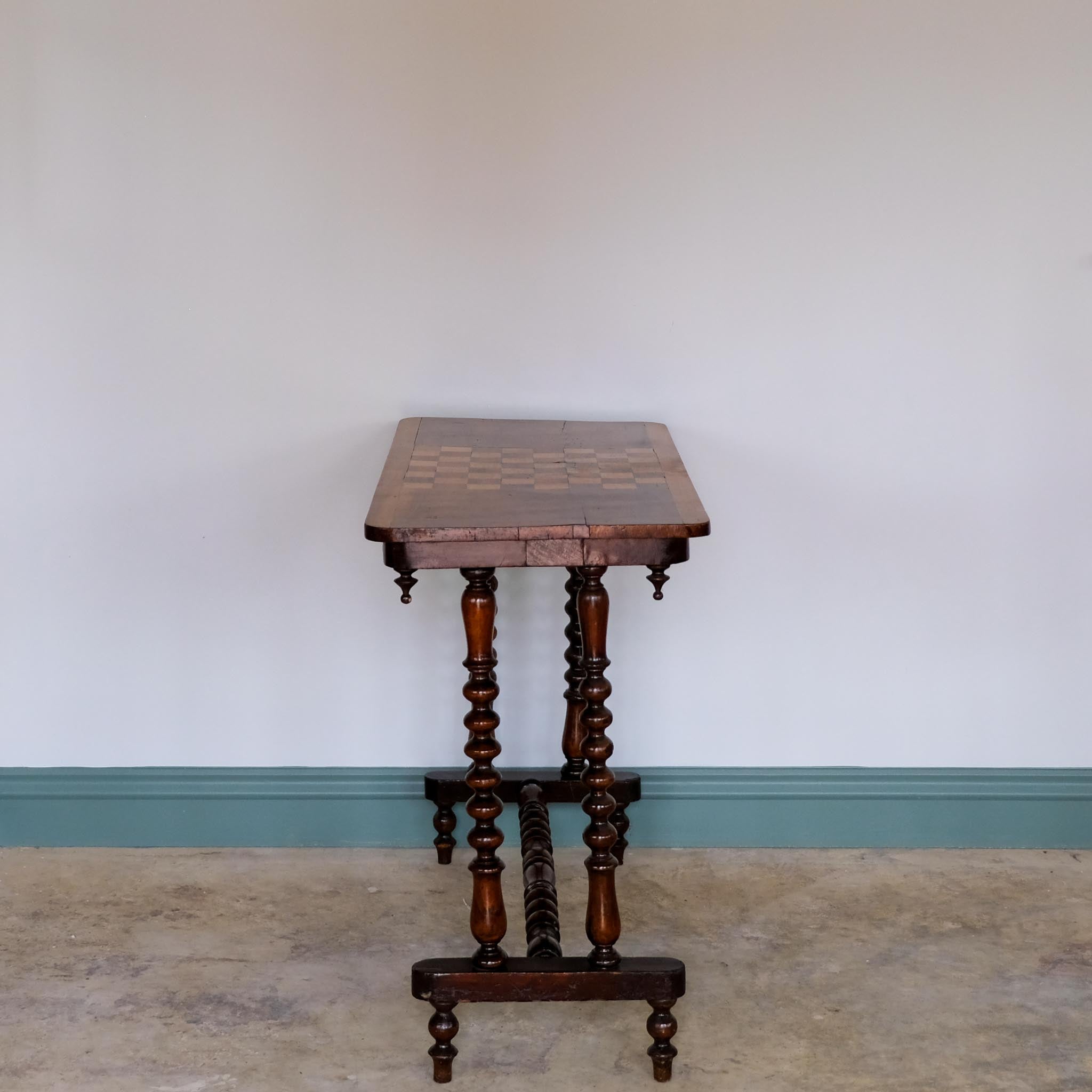
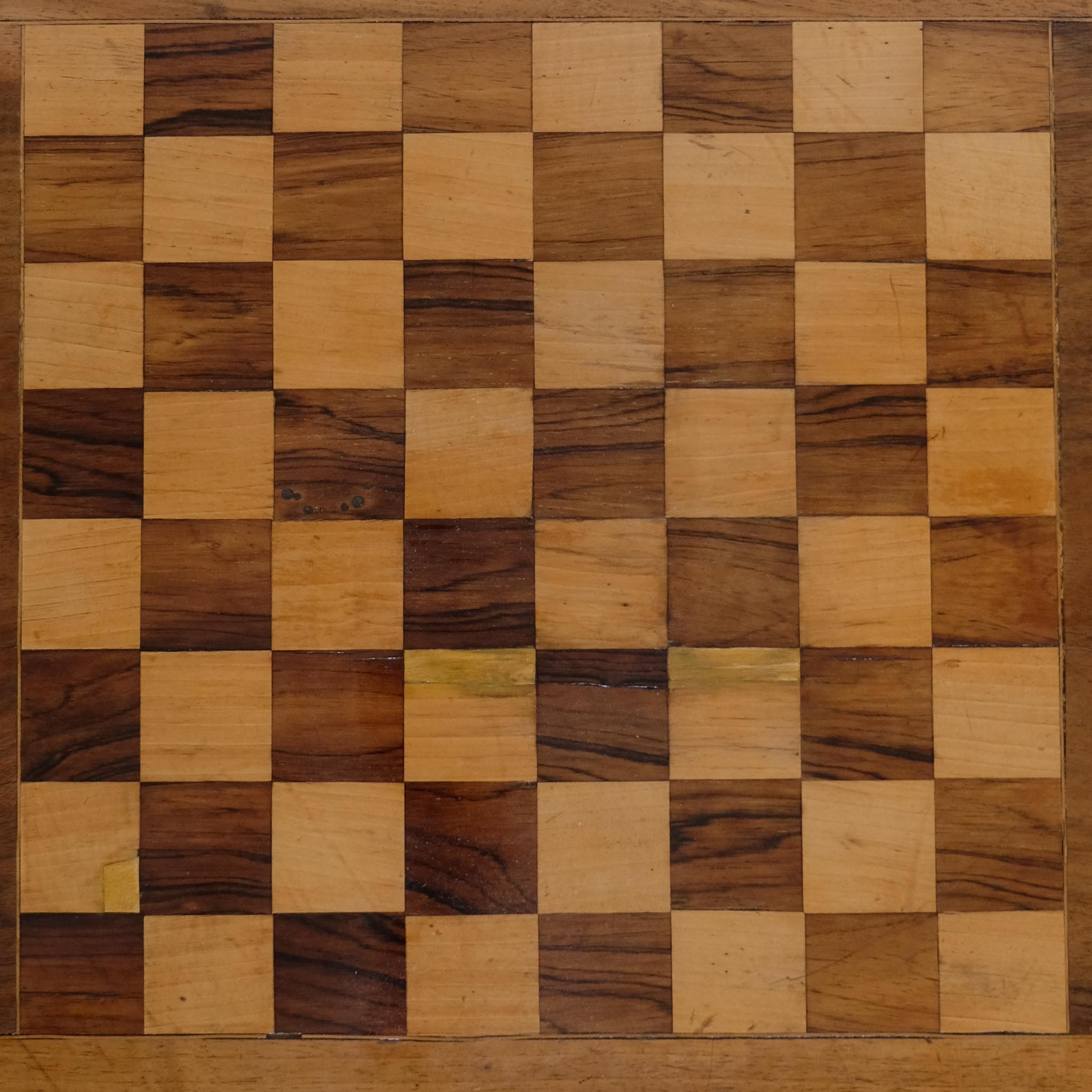
The rectangular top is centred with an expertly inlaid chequerboard, framed by broad boxwood stringing, making it ideal for games of chess, draughts, or checkers. The restrained moulded edge and clean-lined frieze allow the quality of the timbers and craftsmanship to take centre stage.
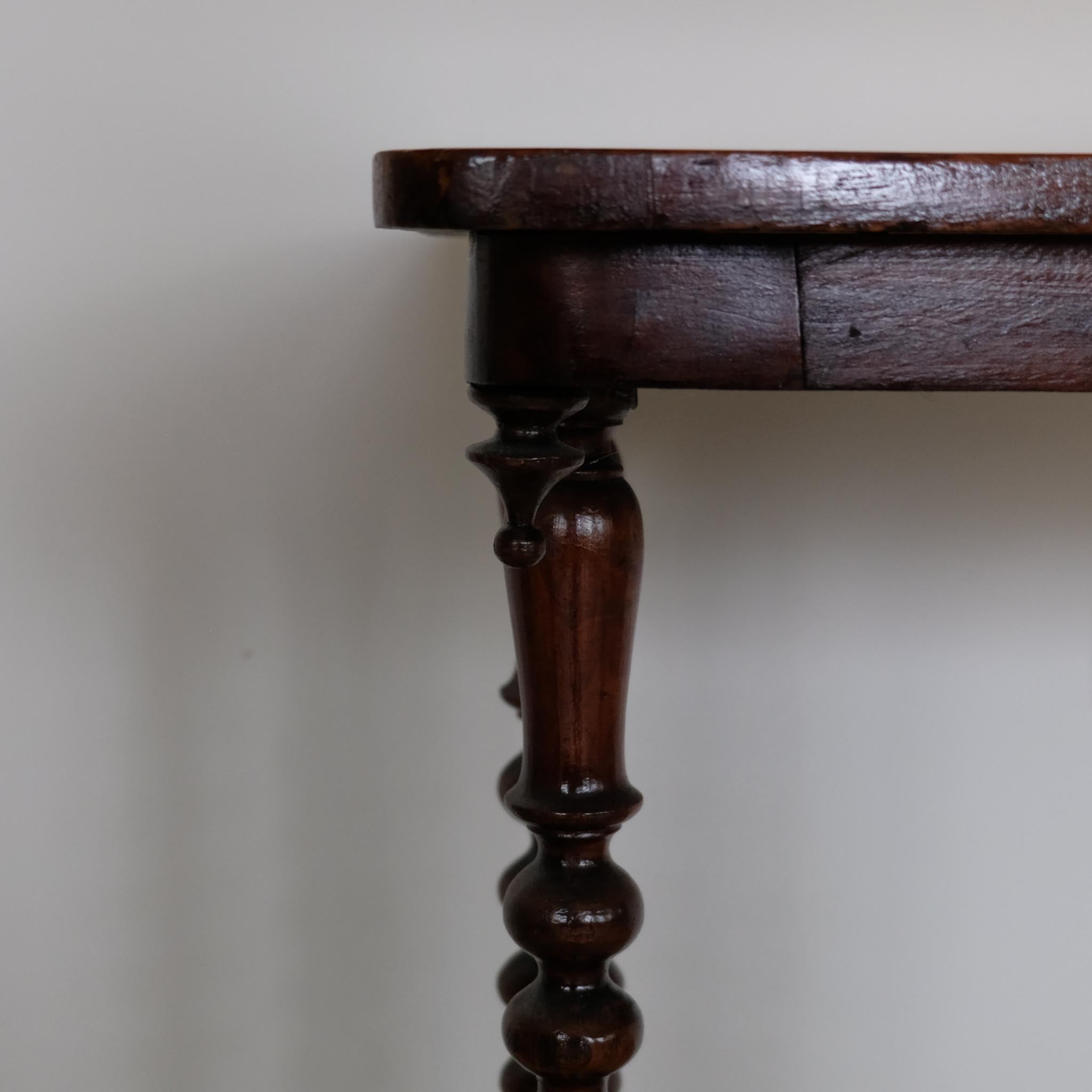
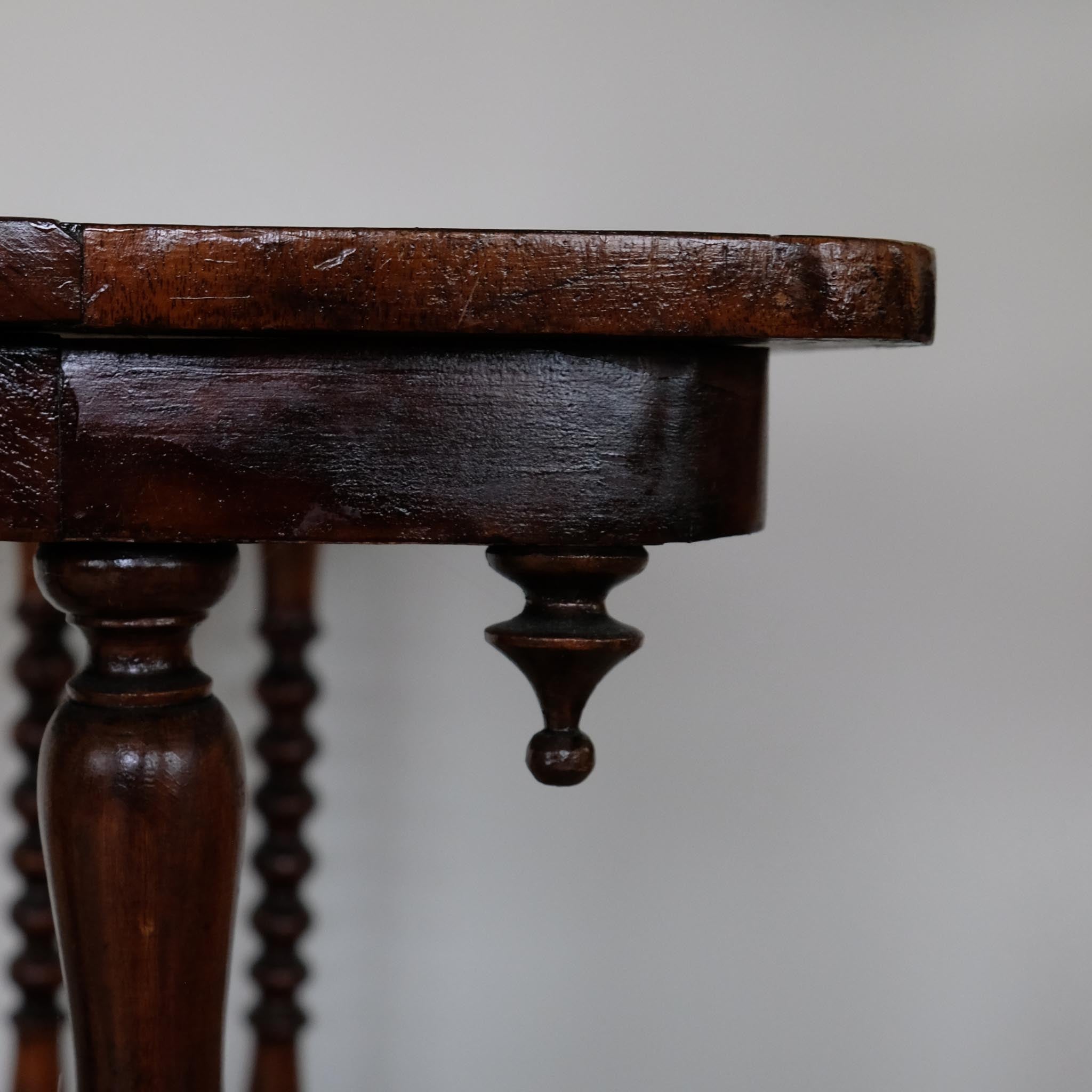
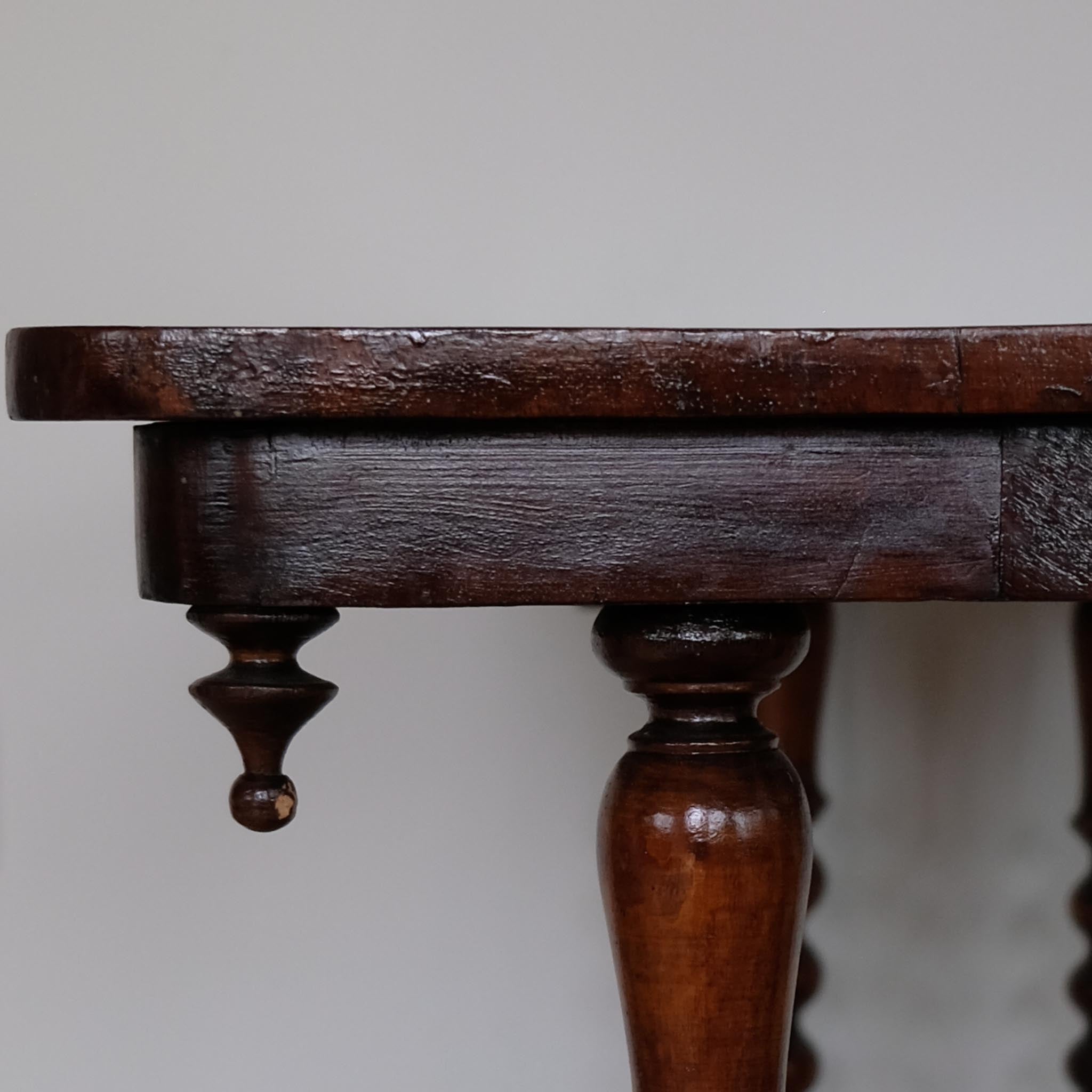
The table is raised on four beautifully bobbin-turned legs, united by an equally impressive bobbin-turned stretcher that provides both visual balance and structural strength. The turned feet retain the elegance associated with late Victorian furniture, while the overall design offers a light, refined appearance.
Wonderfully adaptable, this piece would serve equally well as a games table, side table, lamp table, or occasional table in a drawing room, sitting room, library, or bedroom.
The walnut has developed a rich, mellow patina, highlighting the natural beauty of the timber and adding to the table’s considerable charm.
Presented in lovely, sturdy antique condition with age-related wear consistent with careful use. The table is structurally sound and displays beautifully.
Technical Information
Date: circa 1880
Height: 68 cm
Depth: 40.5cm
Width: 88.5cm
Sustainability
The average piece of furniture generates approximately 47kg of carbon dioxide equivalents – roughly the same as burning 5.3 gallons of petrol. Buying this item second-hand versus a newly made equivalent recovers the energy used to make it, rather than generating further emissions and using new materials.
Choose options