


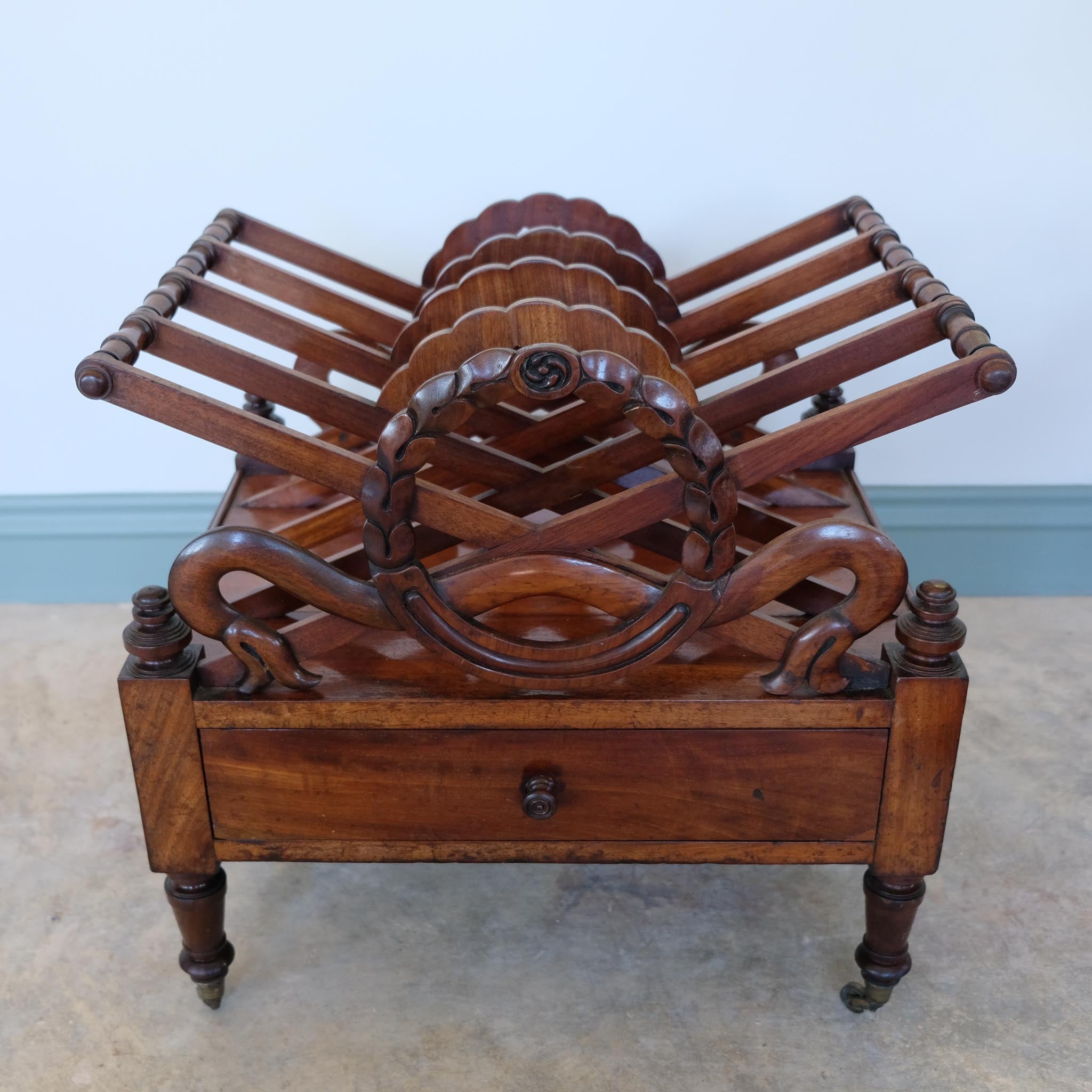
GEORGIAN MAHOGANY CANTERBURY
Characteristics
George IV Mahogany Canterbury
England, Circa 1820
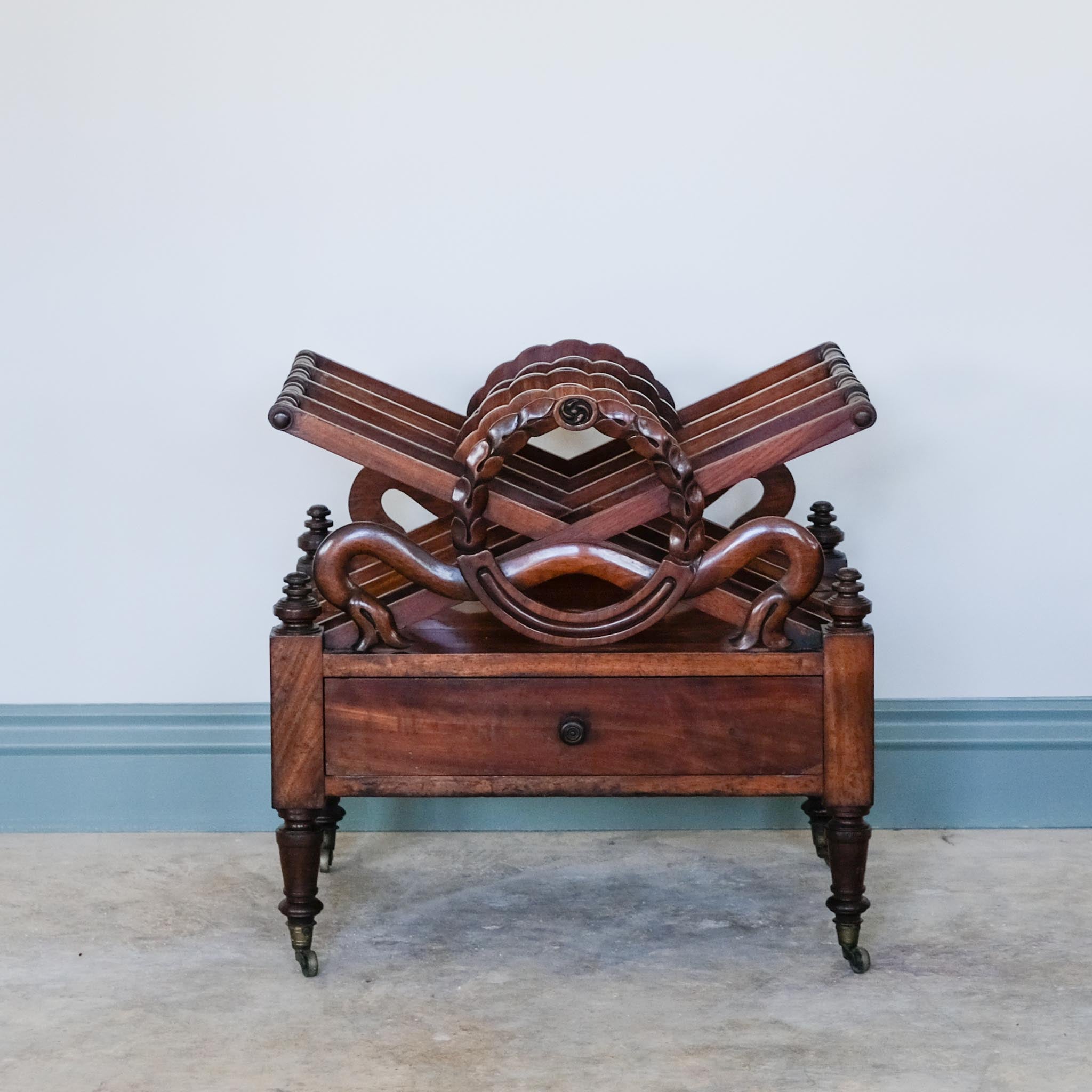
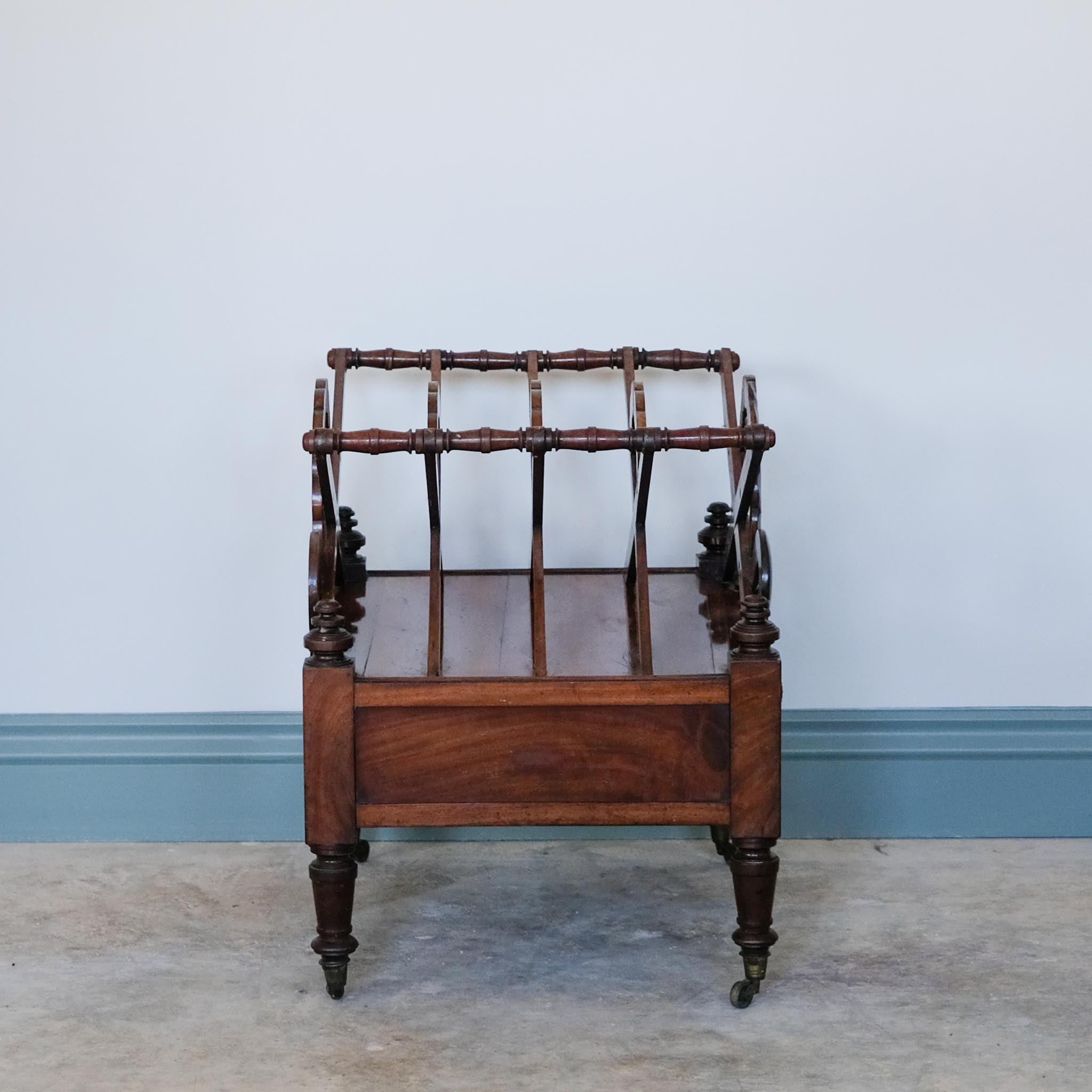
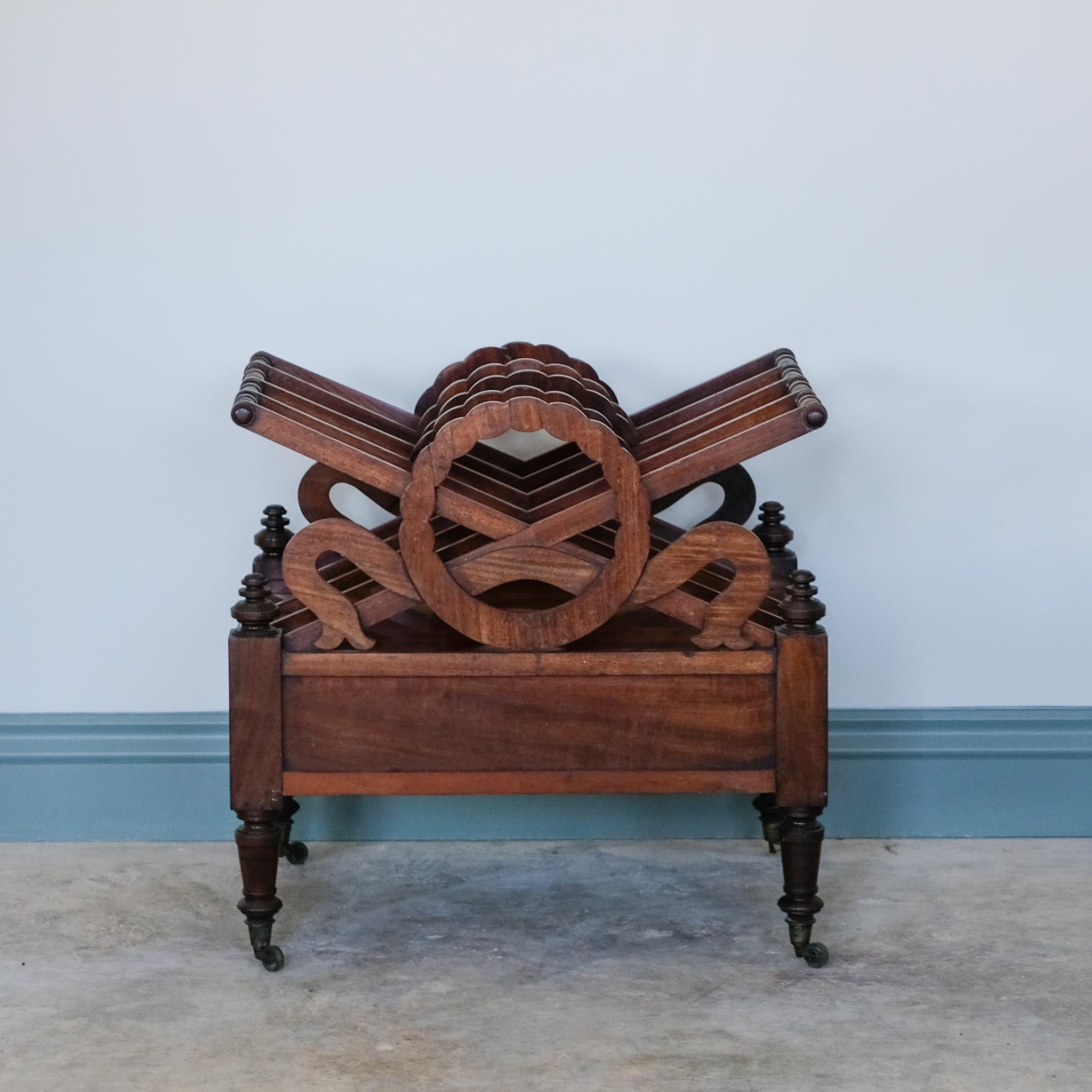
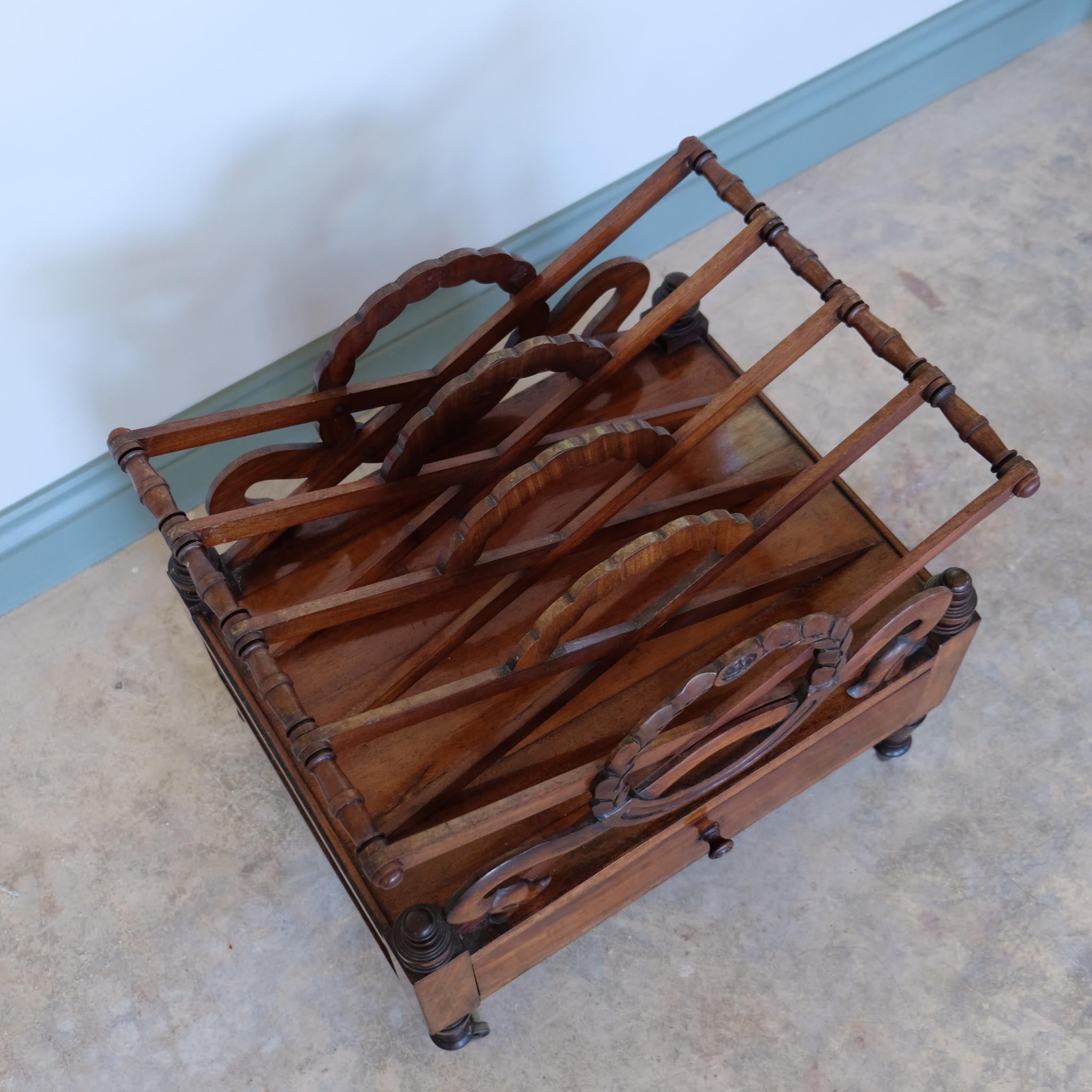
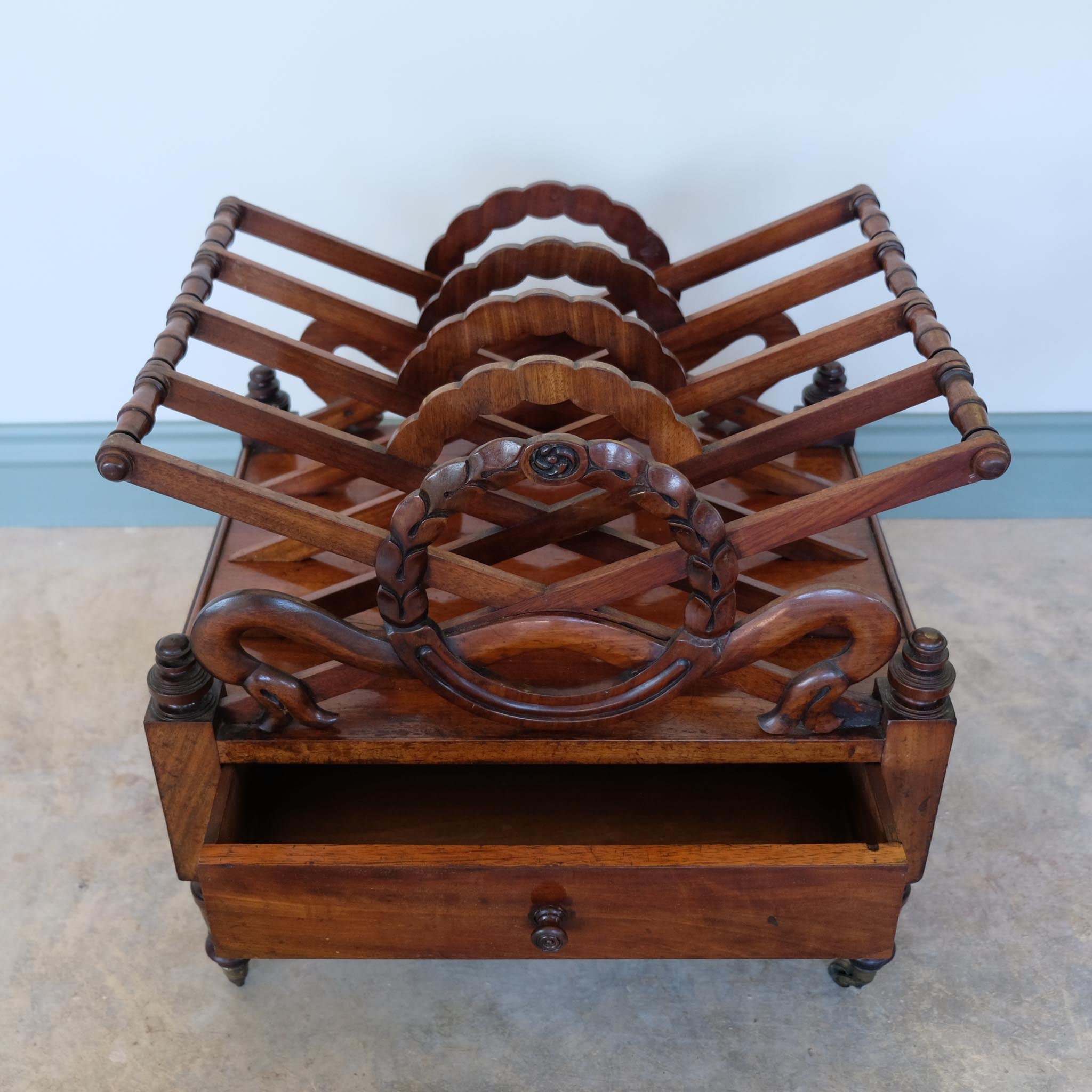
A beautifully crafted George IV mahogany Canterbury, dating from around 1820, combining elegant Regency design with practical functionality. Originally intended for the organised storage of sheet music, portfolios, and correspondence, this highly decorative piece remains a versatile addition to the modern home.
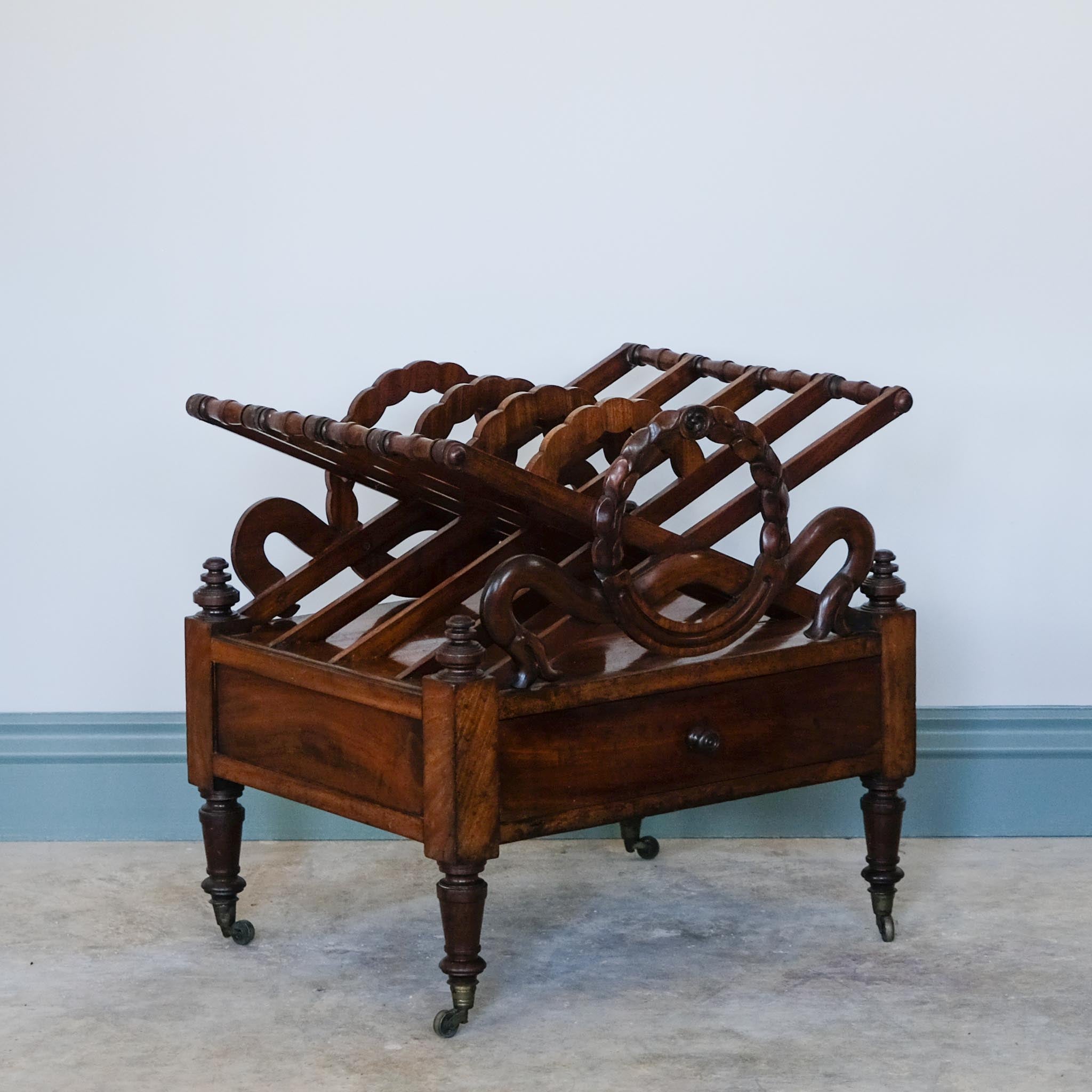
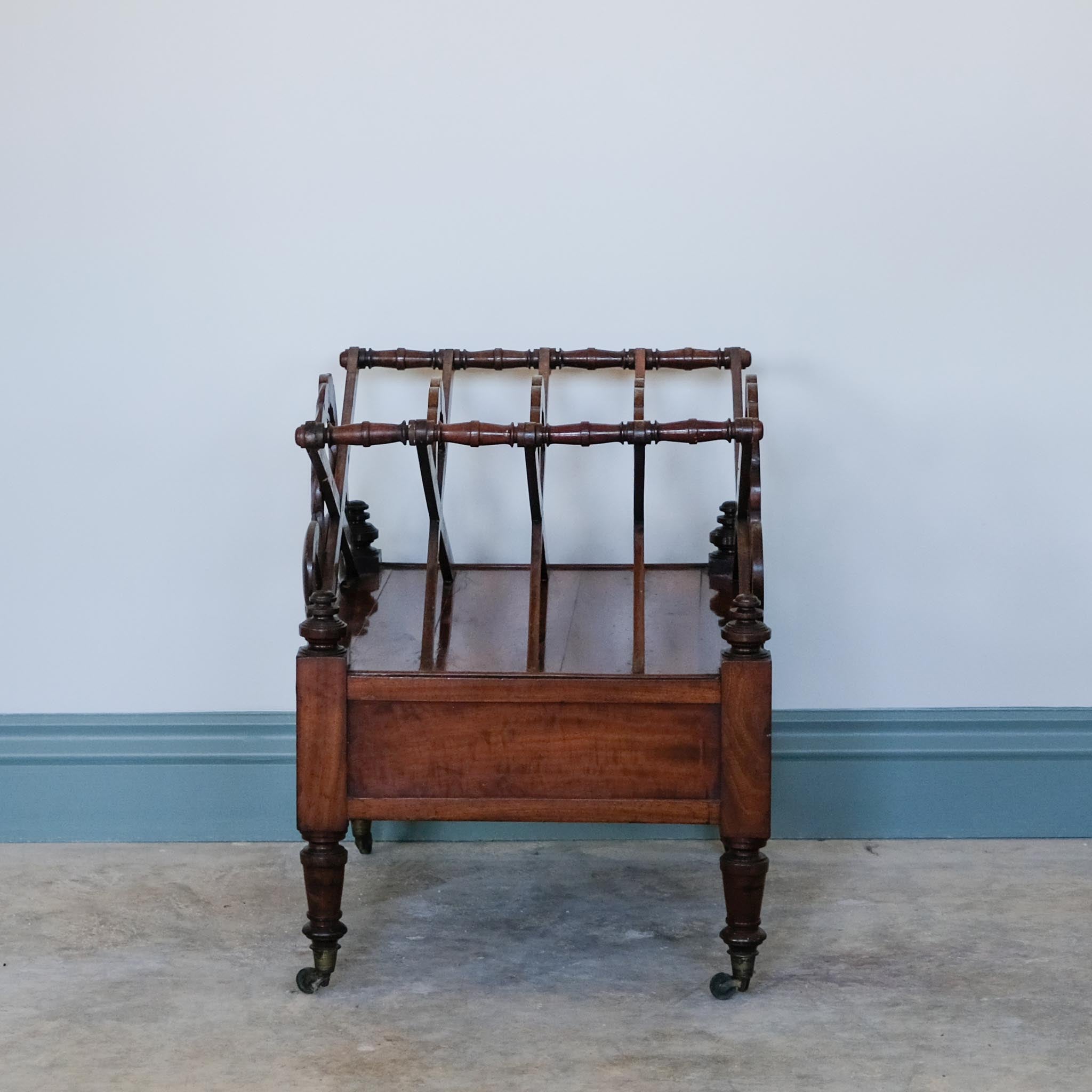
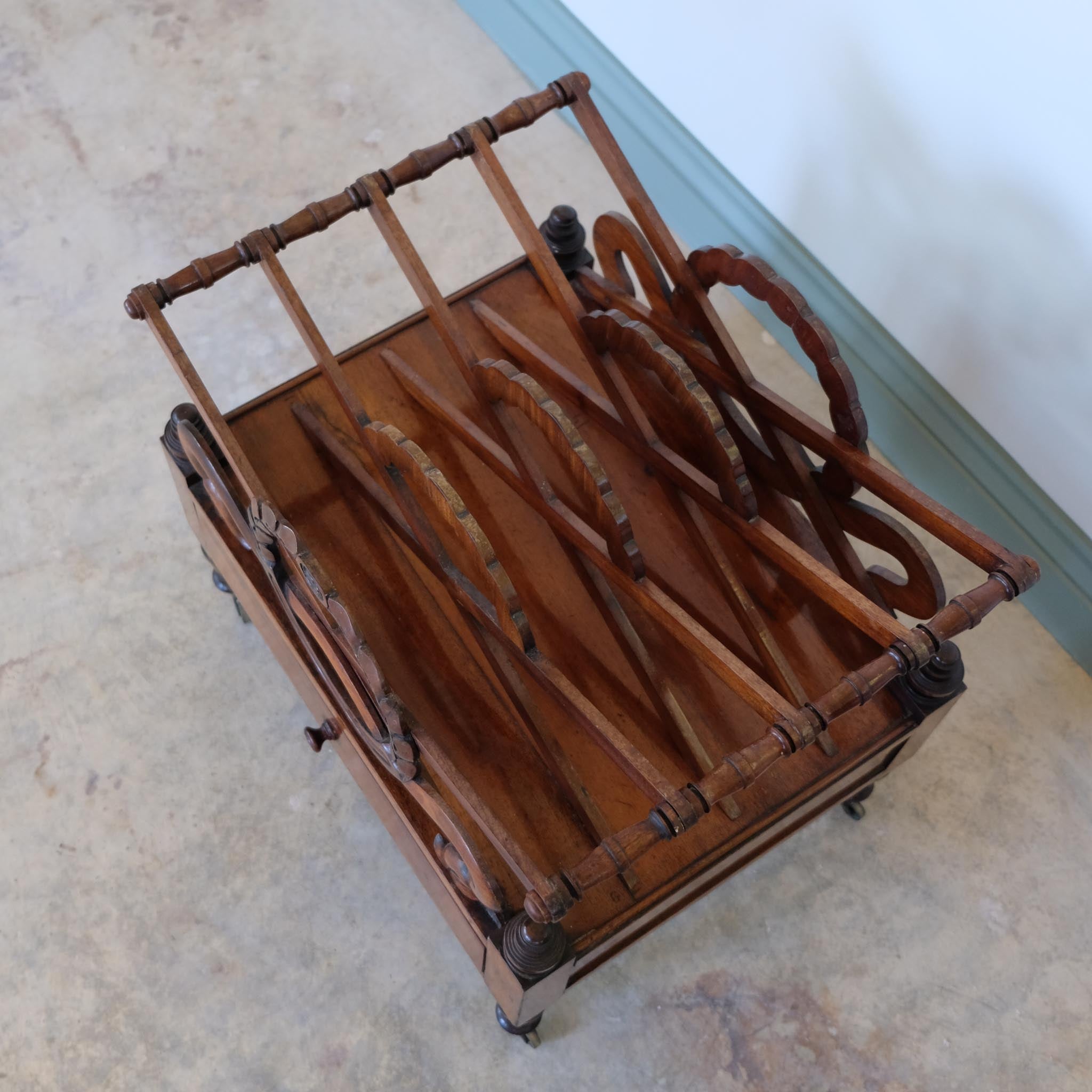
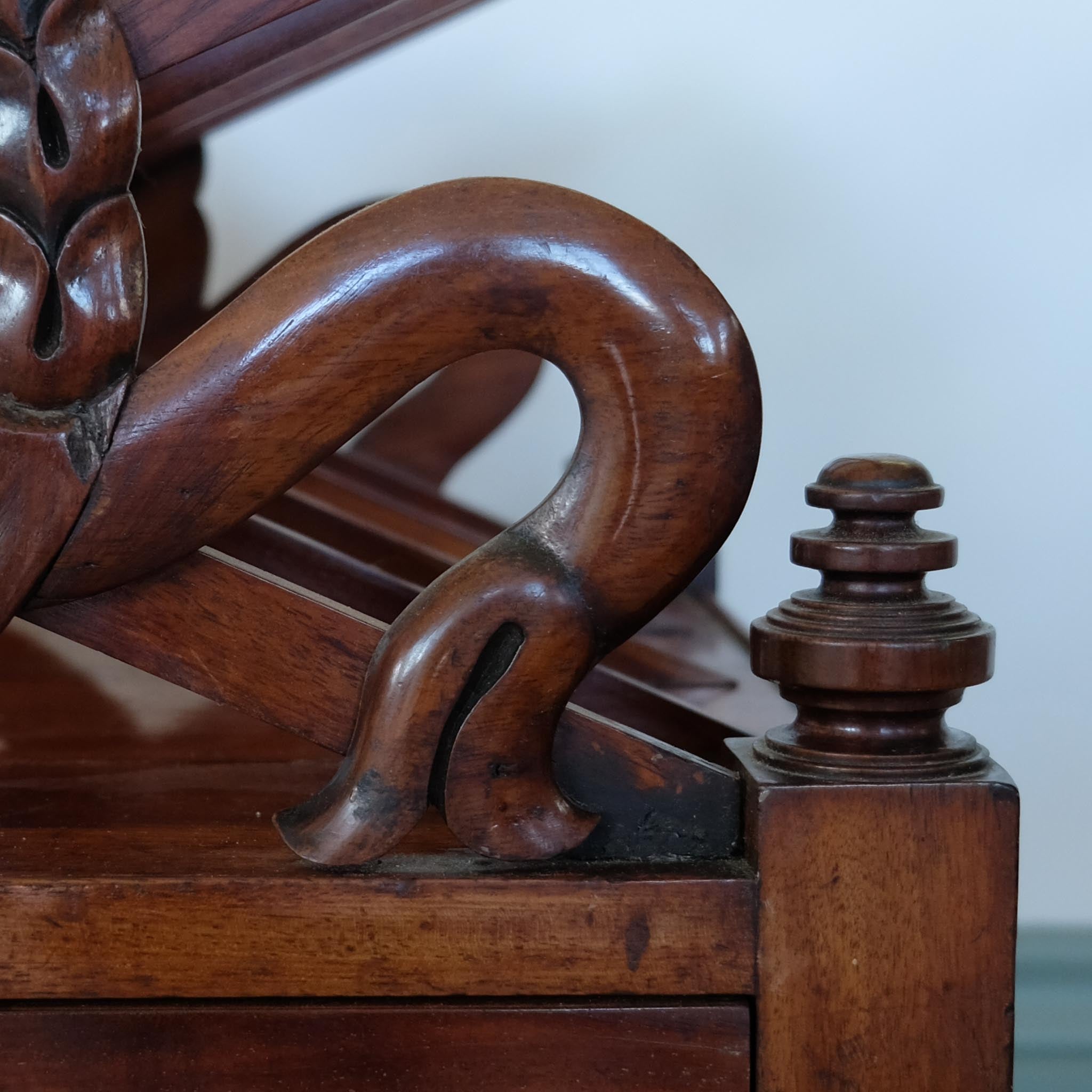
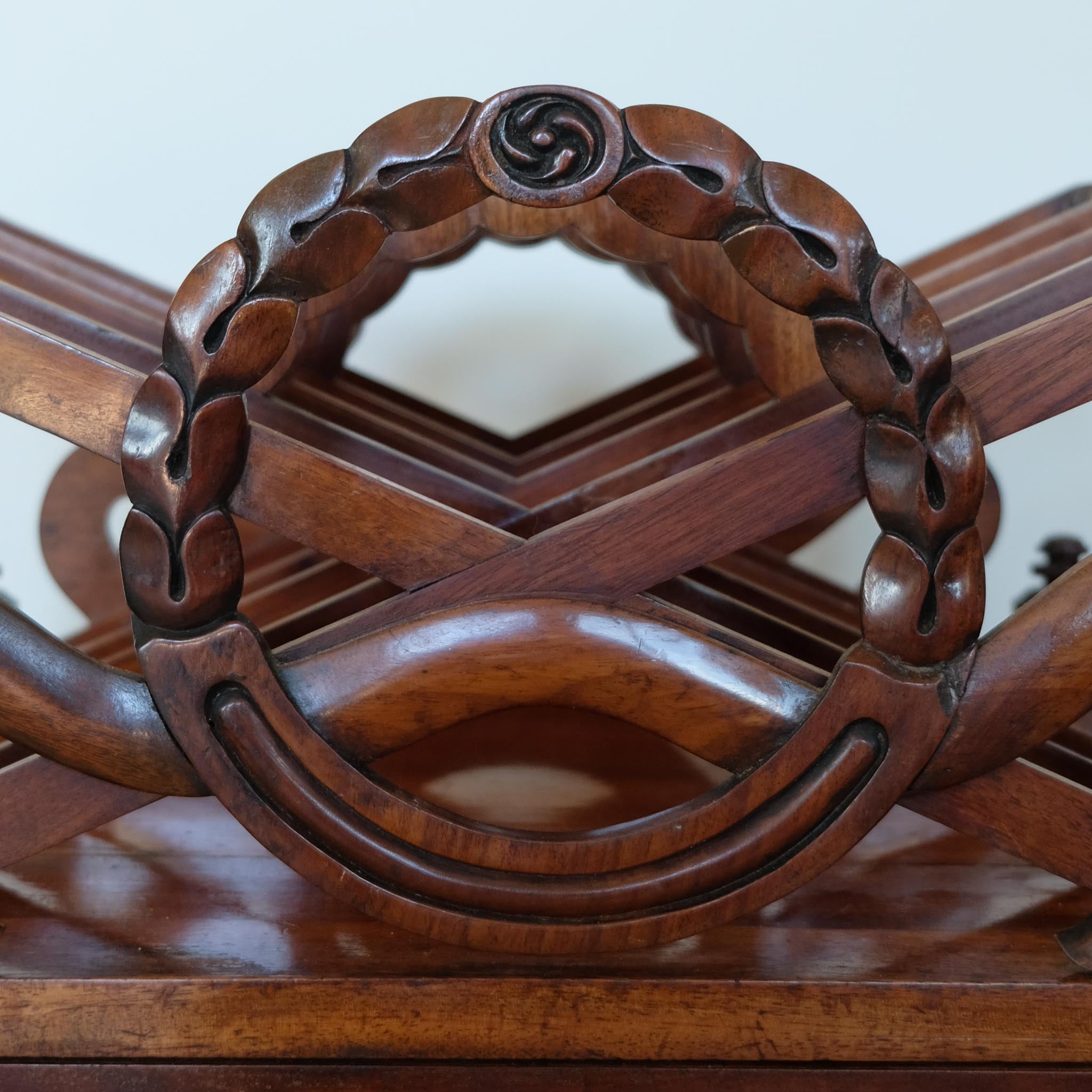
The upper section is formed with five finely constructed cross-framed divisions, creating four generously proportioned compartments. The distinctive design is centred around a beautifully carved laurel wreath motif, flanked by gracefully curved supports and elegant scrollwork, showcasing the refined craftsmanship and classical influences characteristic of the Regency period.
Below, a useful single frieze drawer provides concealed storage for smaller items and is fitted with its original turned wooden knob. The Canterbury is raised on turned and tapering legs, terminating in its original brass castors, allowing it to be moved with ease while retaining its period integrity.
The richly figured mahogany has developed a wonderful mellow patina, highlighting the quality of the timber and adding warmth and character throughout.
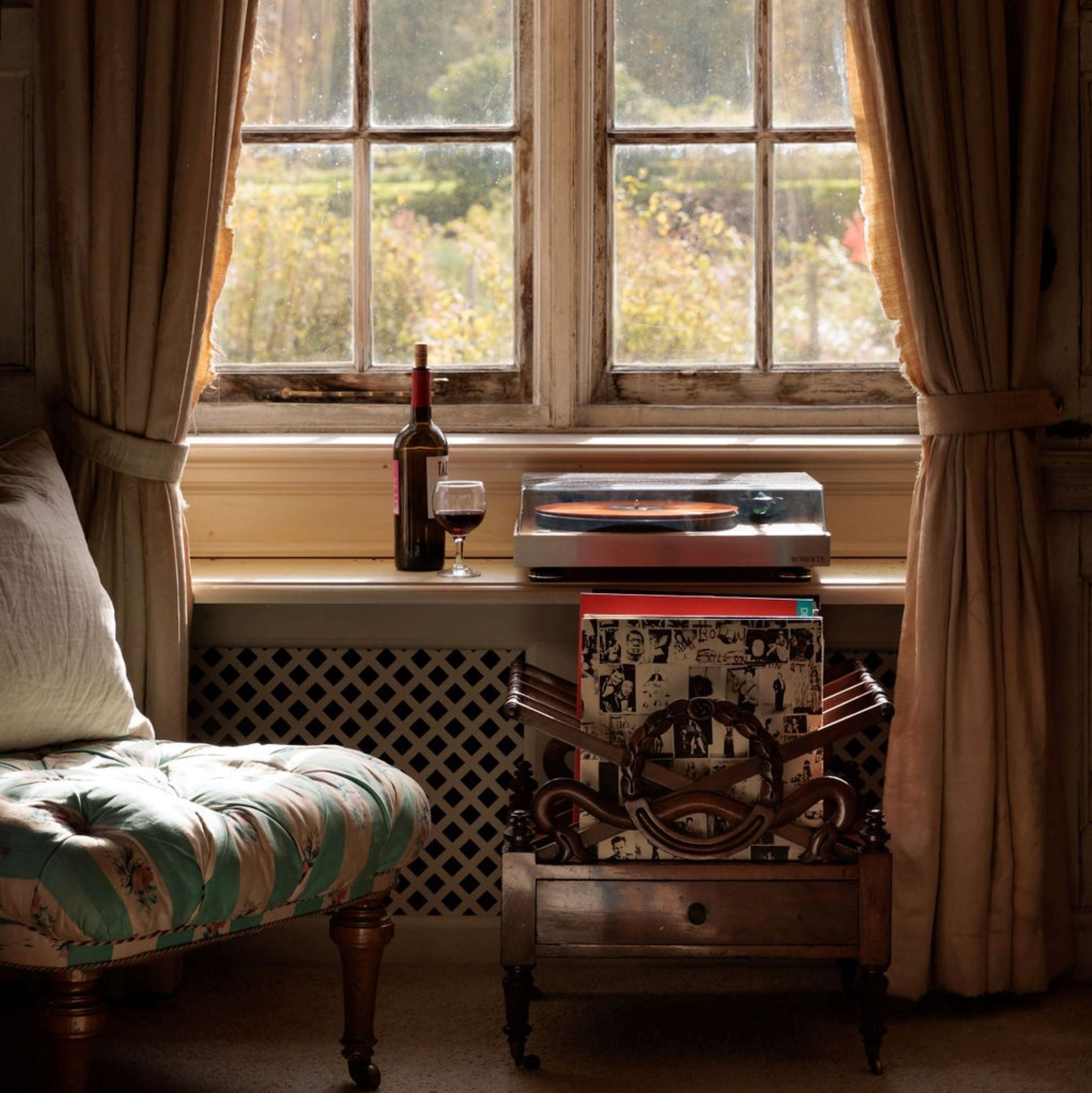
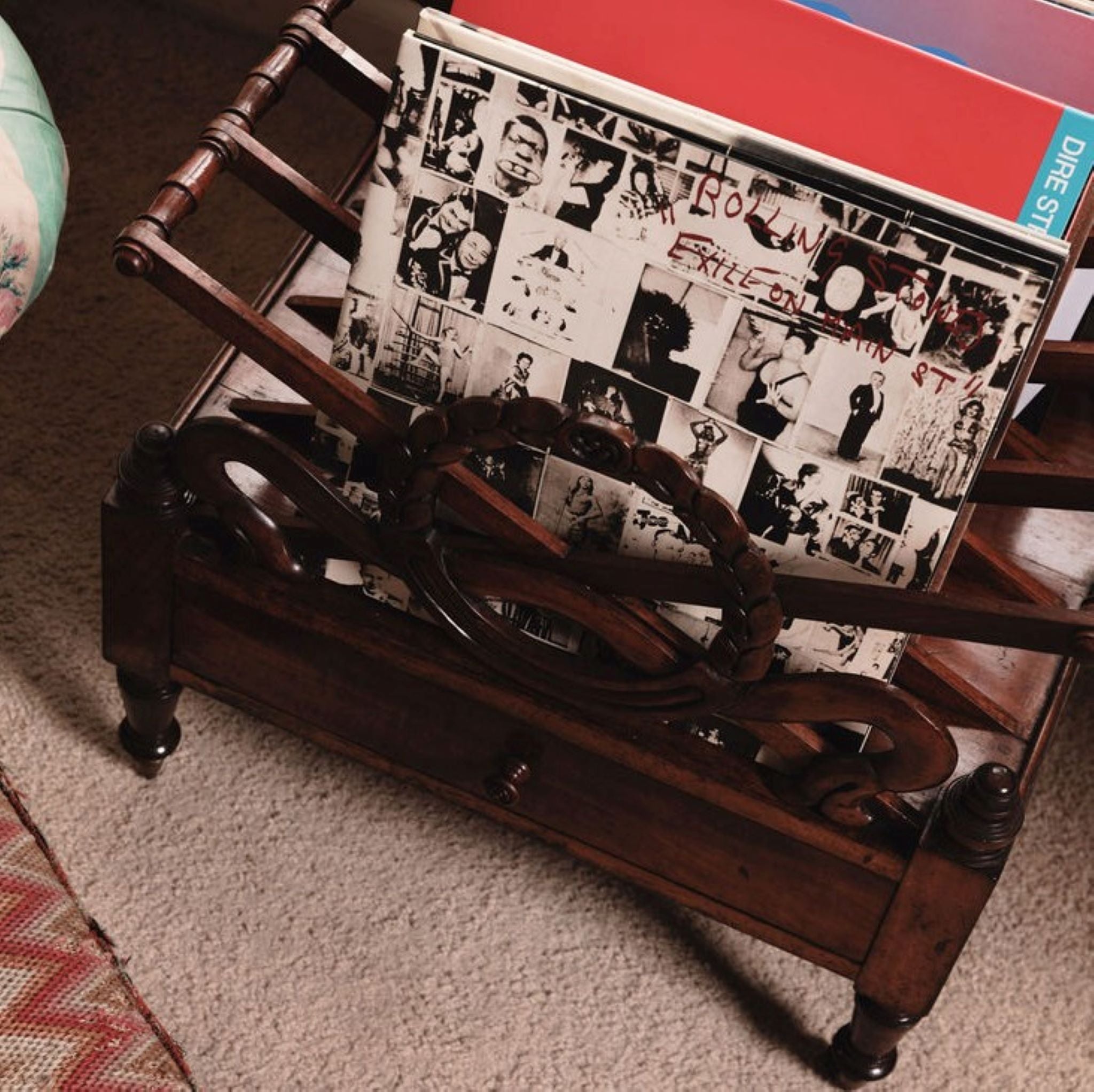
Equally suited for use as a traditional music Canterbury, it would also make an attractive holder for magazines, books, records, or papers in a drawing room, library, study, or sitting room.
Presented in very good antique condition with light age-related wear consistent with its period. Structurally sound, retaining its original castors, and displaying beautifully throughout.
Technical Information
Date: early 19th century
Height: 50 cm
Width: 51 cm
Depth: 38 cm
Sustainability
The average piece of furniture generates approximately 47kg of carbon dioxide equivalents – roughly the same as burning 5.3 gallons of petrol. Buying this item second-hand versus a newly made equivalent recovers the energy used to make it, rather than generating further emissions and using new materials.
Choose options