

GEORGE III SATINWOOD PEMBROKE TABLE
Characteristics
George III Satinwood Pembroke Table
England, Late 18th Century
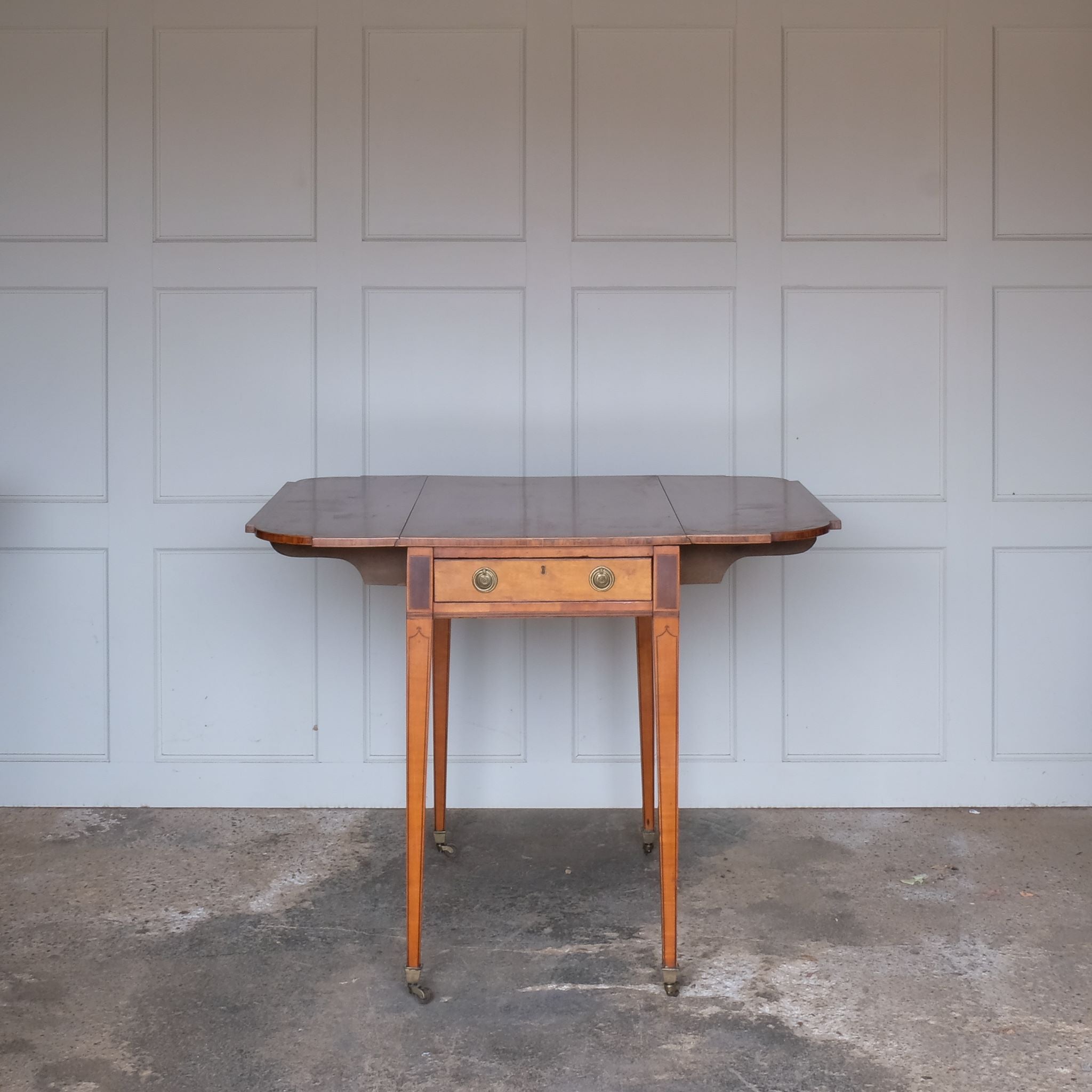
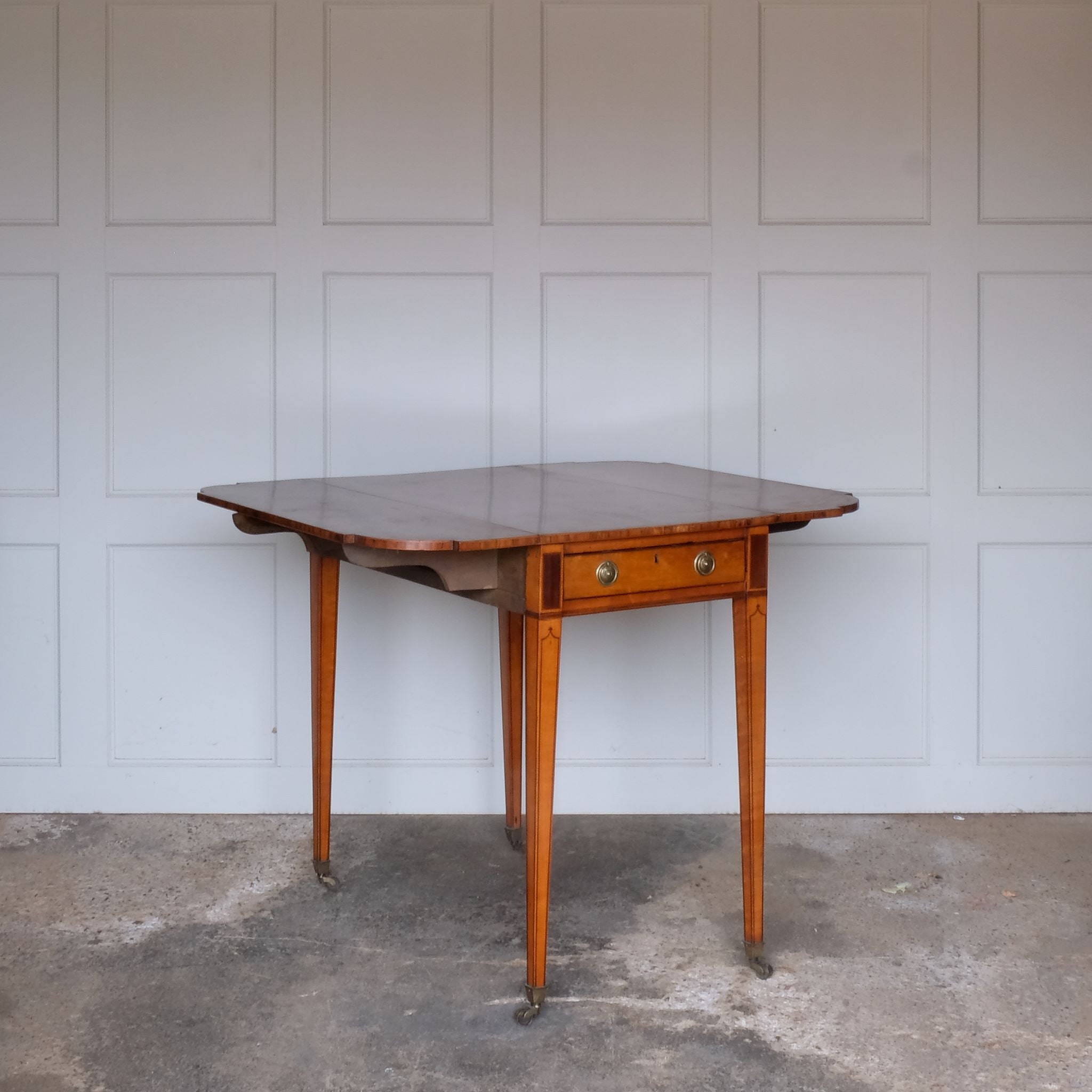
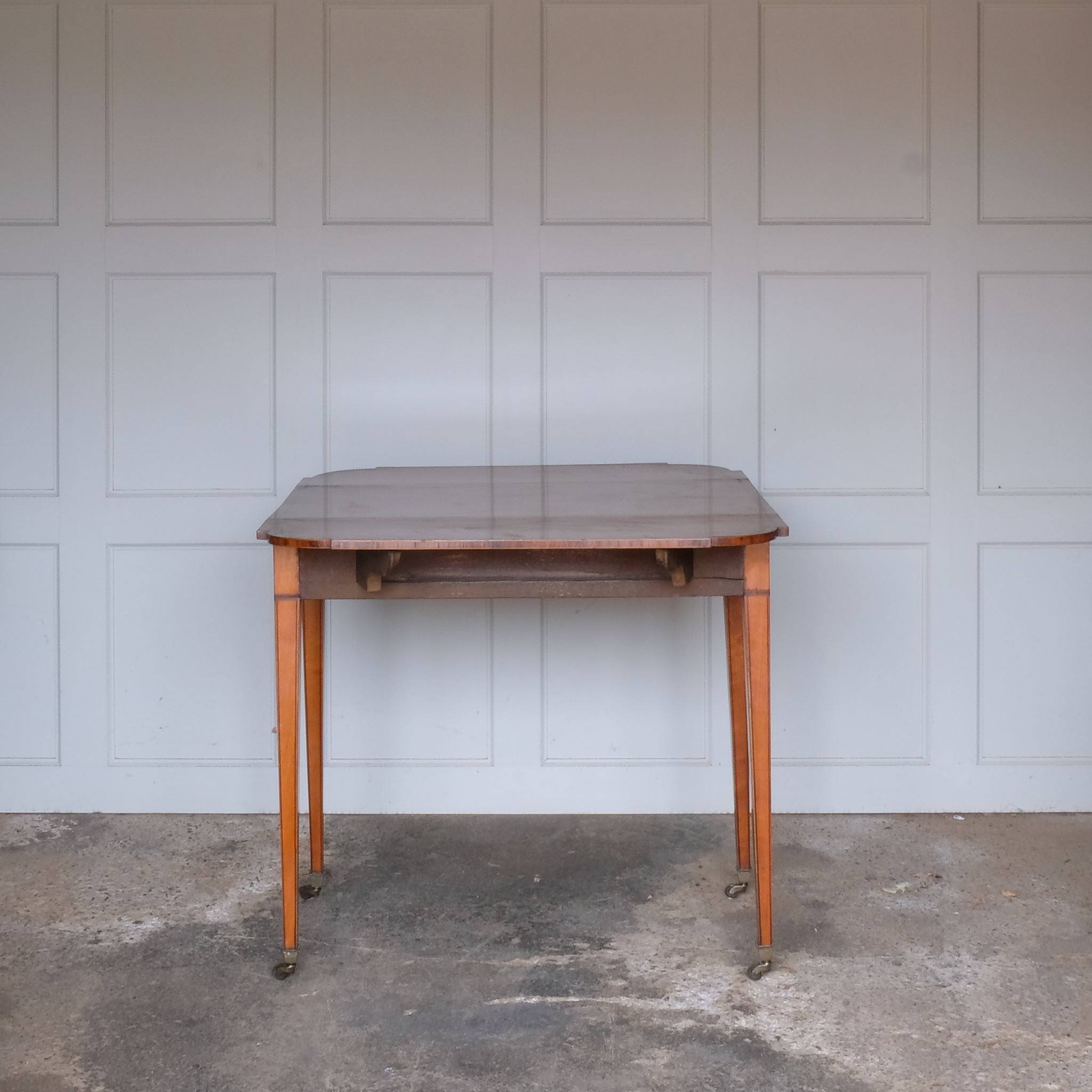
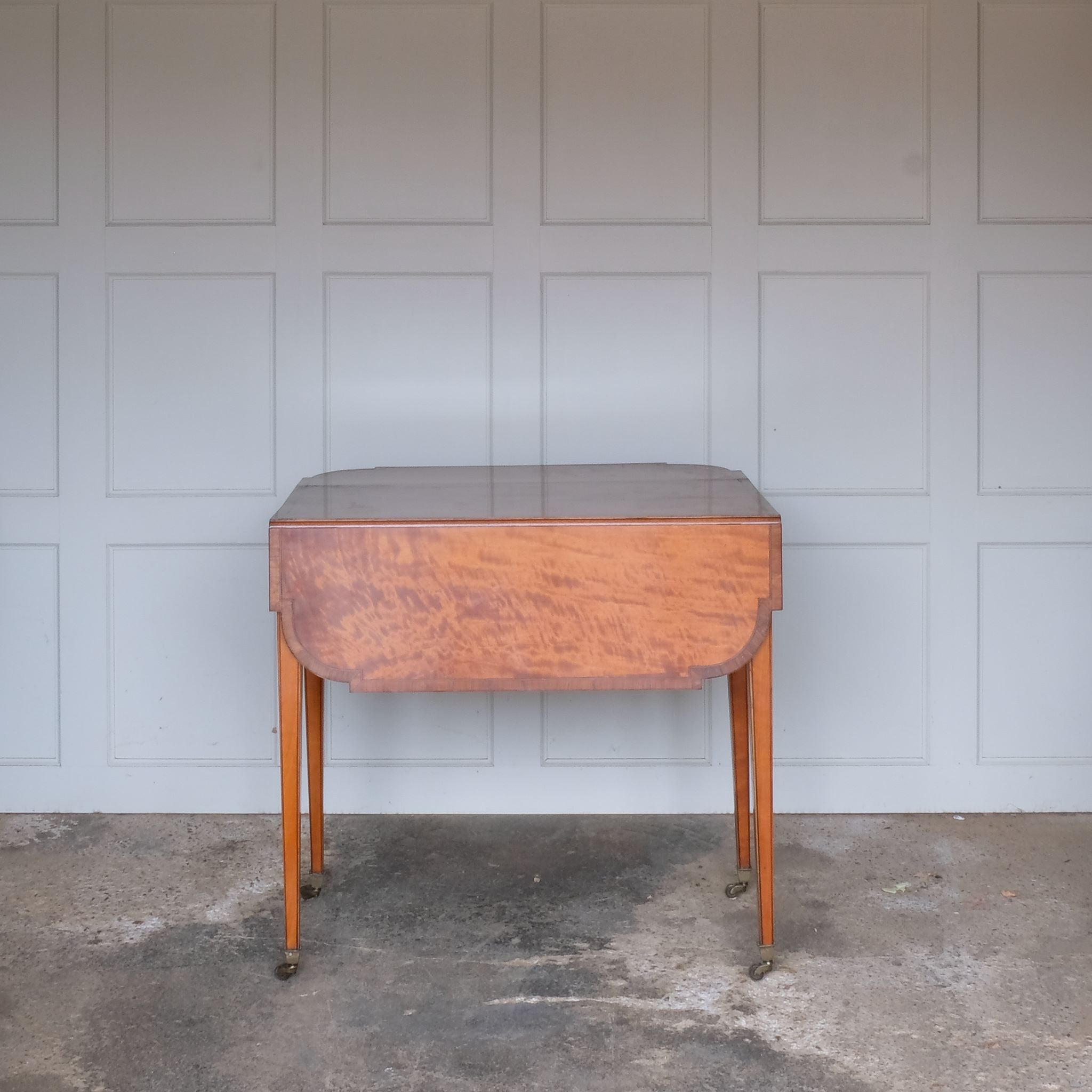
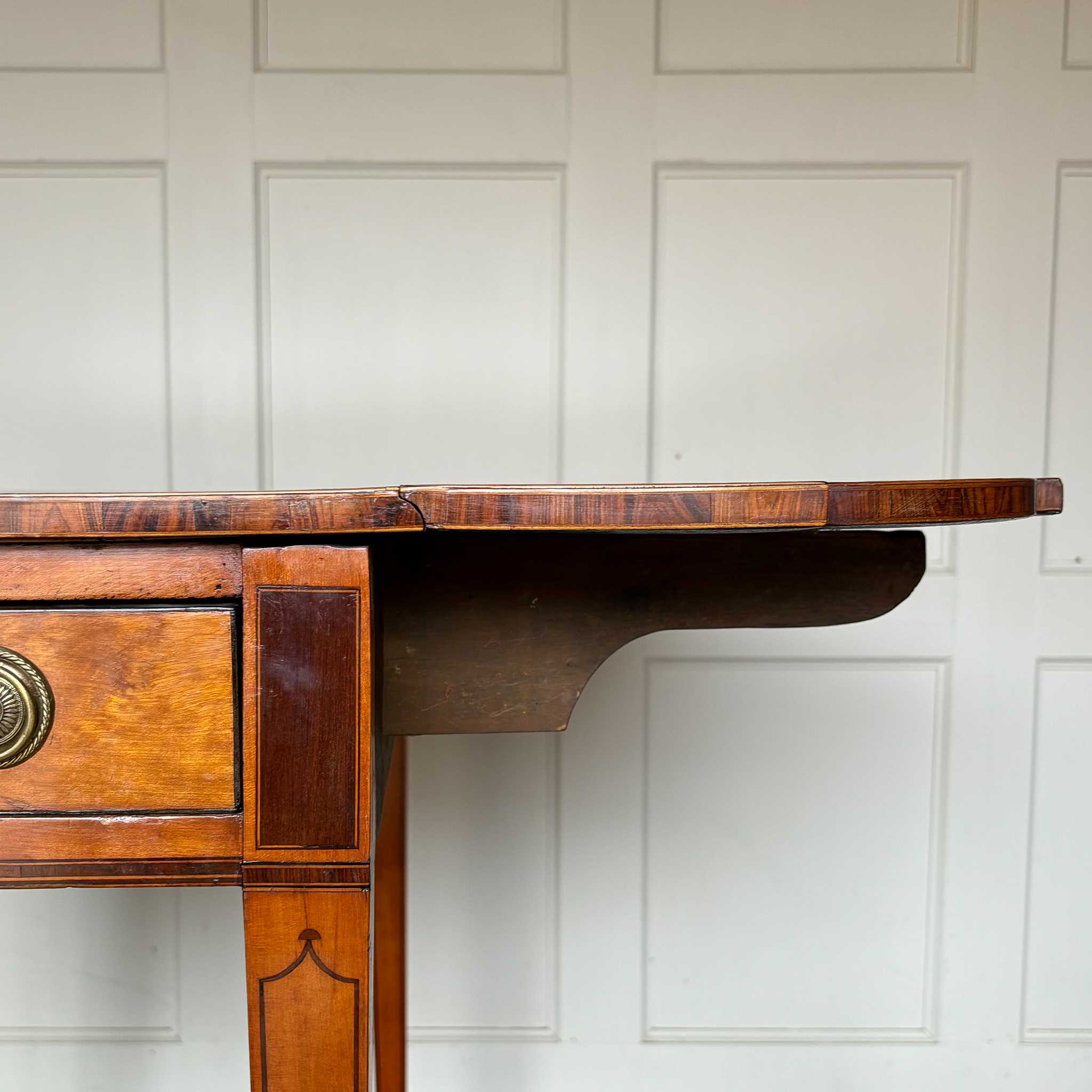
A refined and elegant George III satinwood Pembroke table, dating from the late 18th century and exemplifying the restrained sophistication of the period. Beautifully crafted with exceptional attention to detail, this versatile piece combines graceful proportions with practical functionality.
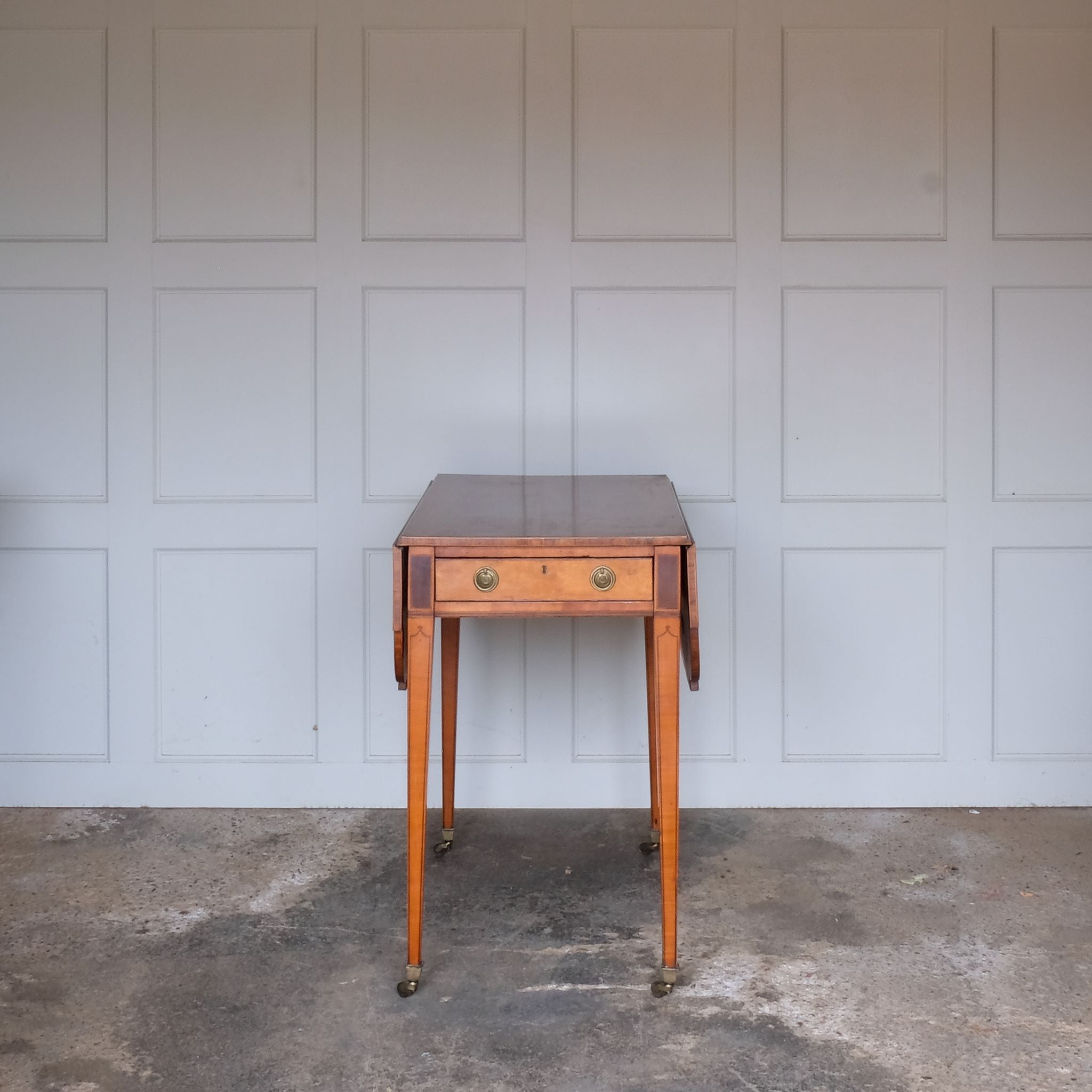
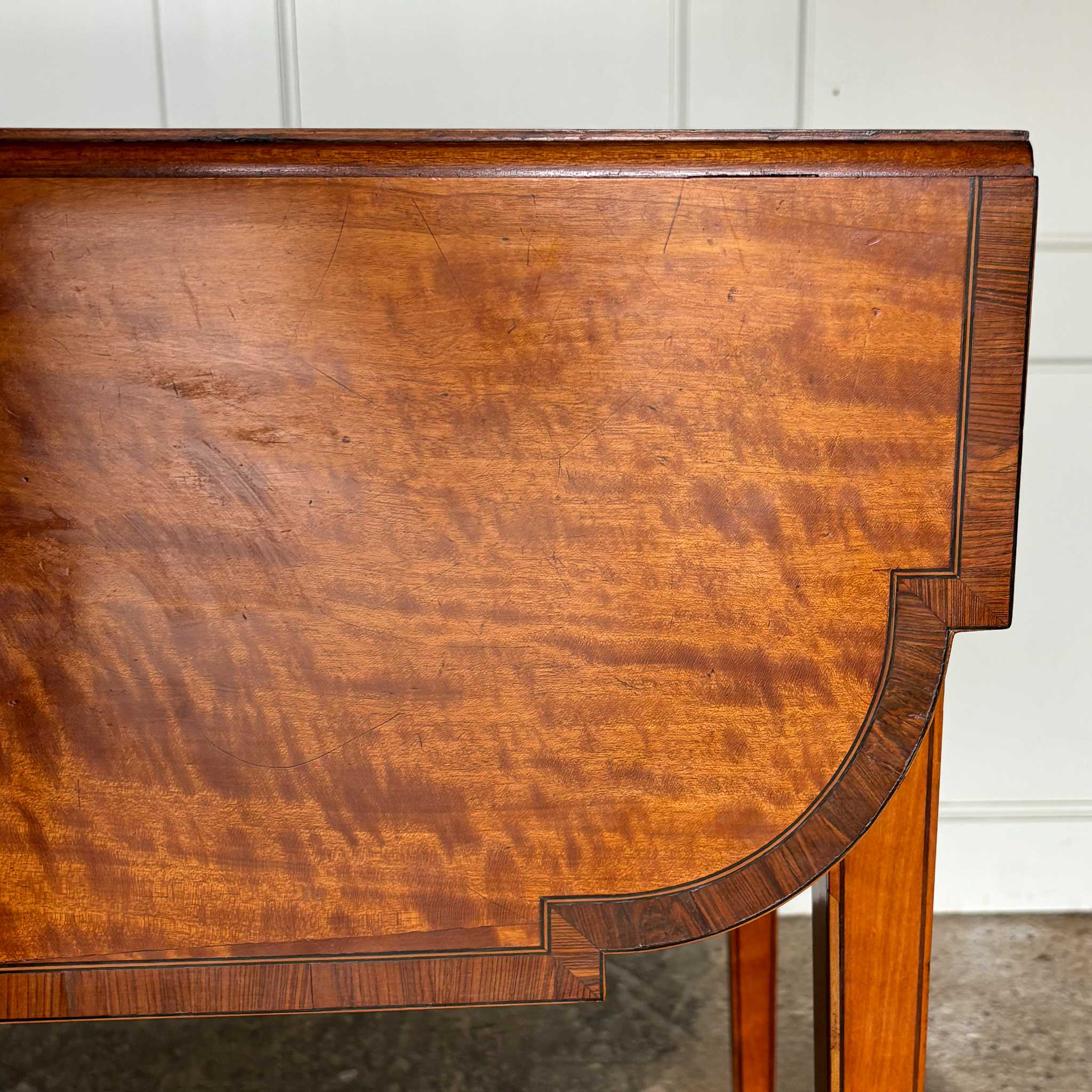
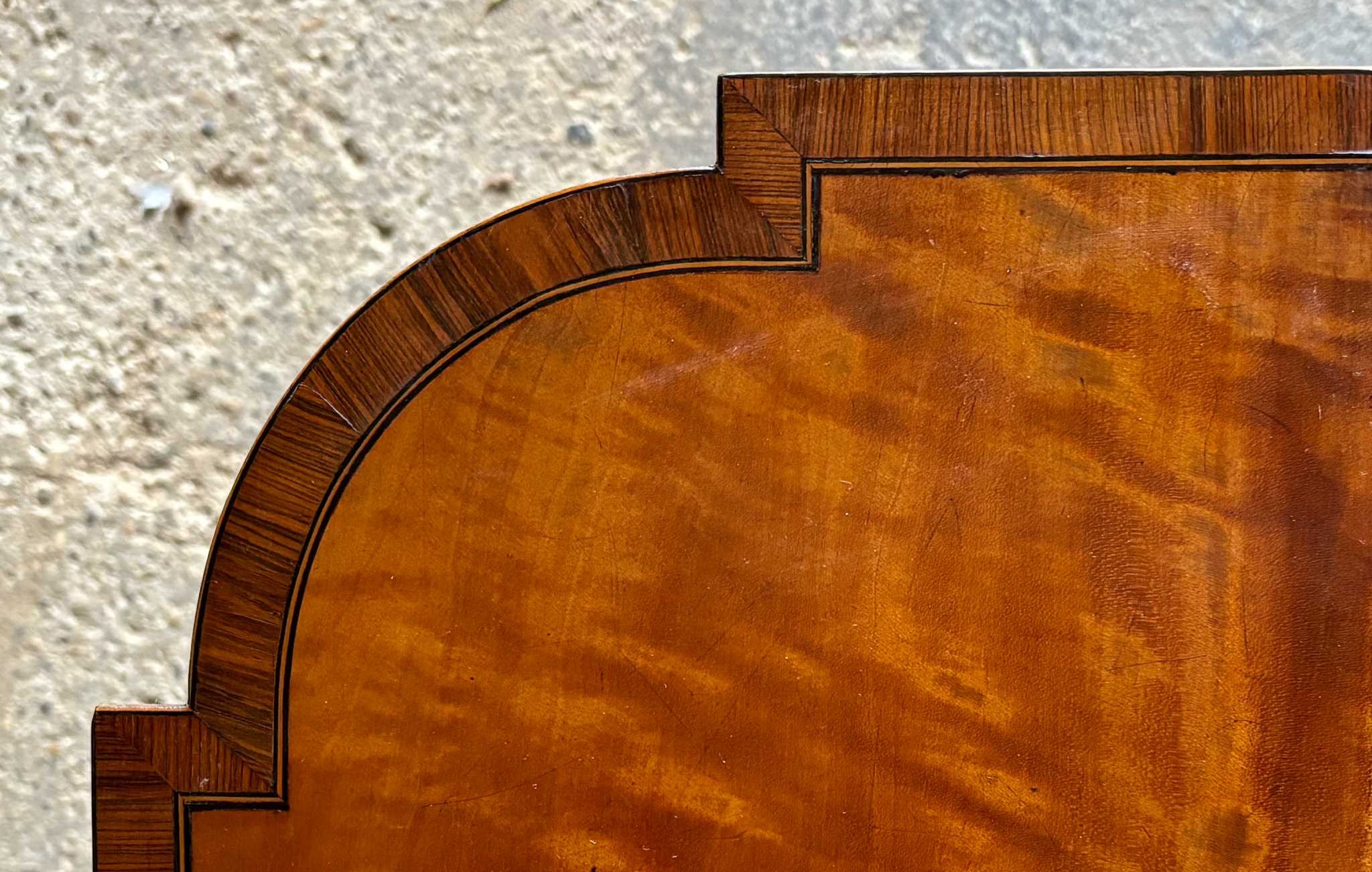
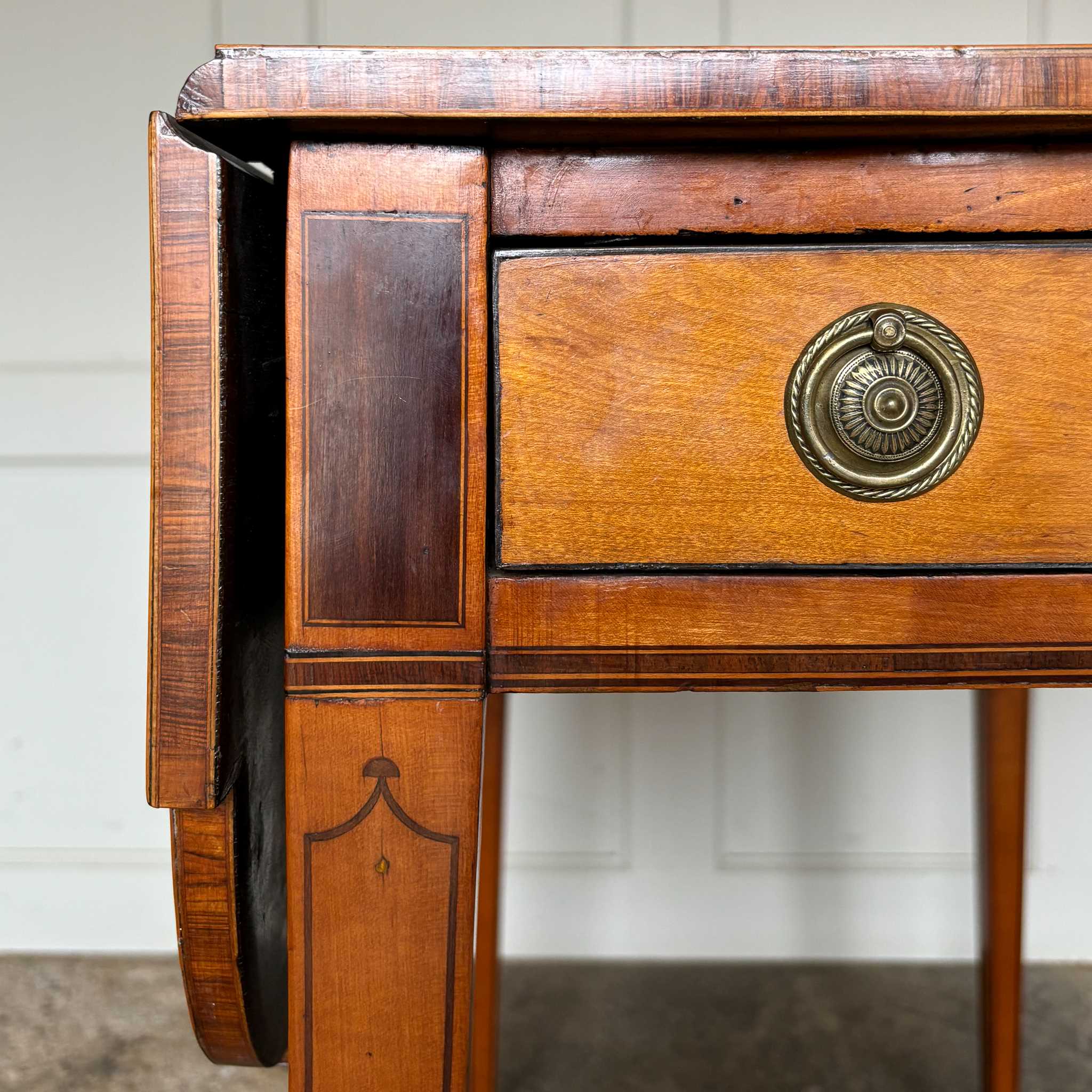
The shaped drop-leaf top, veneered in richly figured satinwood, is enhanced by delicate crossbanding and fine ebony stringing, creating a subtle yet striking decorative effect. The leaves extend effortlessly to provide a generous surface when required while folding neatly to conserve space.
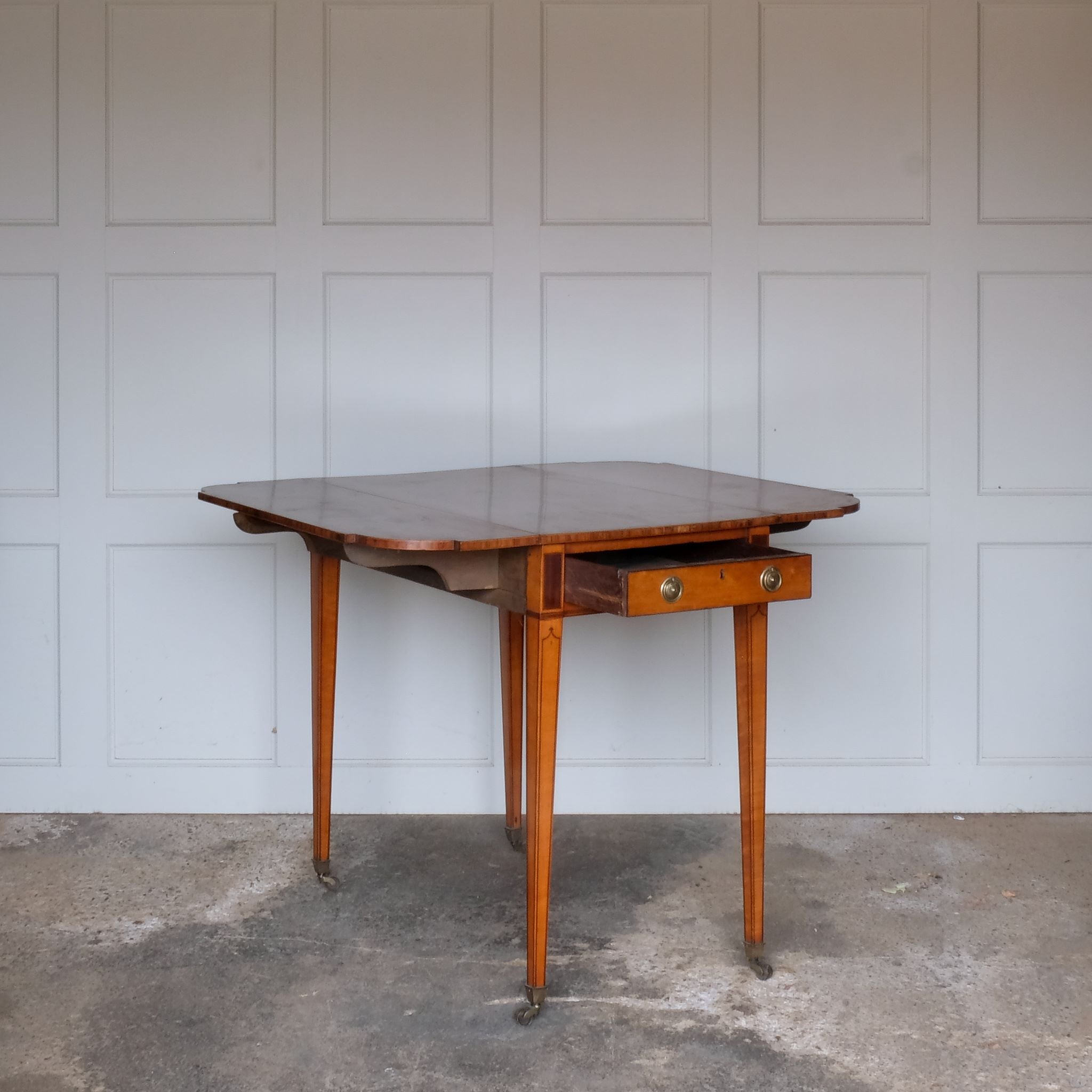
Beneath the top sits a single end drawer fitted with attractive original-style brass lion’s mask handles, balanced by a corresponding dummy drawer on the opposing side to maintain perfect symmetry. The table is raised on slender tapering square legs, each inlaid with fine linear stringing and terminating in brass castors, allowing the piece to be moved with ease.
The satinwood has developed a wonderfully mellow patina, with gentle surface wear commensurate with age that enhances its authenticity and character.
Originally designed as a highly adaptable household table, it remains equally suitable today as a side table, console table, occasional table, writing table, or centre hall table.
Presented in very good antique condition consistent with careful use. Structurally sound and ready for everyday enjoyment.
Technical Information
Date: 18th century
Height: 74cm
Width: 47cm (closed), 97cm (open)
Depth: 81cm
Sustainability
The average piece of furniture generates approximately 47kg of carbon dioxide equivalents – roughly the same as burning 5.3 gallons of petrol. Buying this item second-hand versus a newly made equivalent recovers the energy used to make it, rather than generating further emissions and using new materials.
Choose options